By Derese Tariku, De Birhan Media Staffer Addis Abeba 31 October 2012
Debre Berhan University, located in Amhara Region, North Showa Zone, in Debre Berhan town, 130 kms far form Addis Ababa to the North - East, has been shaking with student protests and clashes, sources in the Campus told De Birhan.
A number of students have been injured, properties were damaged due to the protest and local police are heading to the Campus. Most of the injured students have been taken to the nearest hospital.
Some sources say the cause of the clash was in relation to students' protest to an "unfair academic grading". " The students were staging peaceful protests against a new grading system being applied in the College. Federal Police officers took violent actions to quell the protests " the source added. The telephone network of the town has been disconnected.
Debre Berhan University started work on January 28, 1999 E.C (2007) enrolling 725 students in the faculty of education with two streams, namely Businesses Education and natural science teaching. Currently, there are around 10, 000 students attending in the University.
The new Eritrean discourse these days is about constitutional rewriting and the rights of nationalities and ethnic groups. The Eritrean regime is reported to have exploited and drummed the "Ethiopia is the prison of nationalities" discourse, and the same debate has now entered Eritrea in full swing, they are saying "Eritrea is a prison of minority ethnic groups" and are asking for liberty and rights. The architect of the 1997 Eritrean Constitution, Professor Bereket Habte Selassie is now working with world class experts to "rewrite" the Eritrean Constitution. The main reason being the issue of the rights of ethnic groups and nationalities in Eritrea.
29 October 2012 An Egyptian media, Ahram Online reported today citing Egyptian Prime Minister Hisham Qandil that the Ethiopian government has announced plans to grant Egypt one million square meters of land.
Ahram Online stated that the land grant was for Egypt to " establish an industrial zone with a view towards boosting trade and investment between Egypt and the states of the Nile Basin."
Hatem Saleh, Egyptian minister of industry and foreign trade, said on Wednesday that the Ethiopian banking sector would finance between 50 and 70 per cent of Egyptian investment projects in the country, the Ahram Online added.
Prejudice,
stereotype and discrimination, however rich, educated and self actualized one
might be, disillusion the person, if victimized. Aside with skin color, ethnic,
religious and other types of discrimination experienced in most parts of the
world in this day and age, one form of discrimination is still widely abound in
most developing countries particularly in Ethiopia, occupational. This short
piece solely based on secondary sources, reviews the embedded occupational,
social, cultural and ethnic discrimination and regime oppression against an
isolated and little known society in the southern part of Ethiopia, the Manjo
or also spelled as Menja or Manja.
The
Manjo/Menja
The predominantly
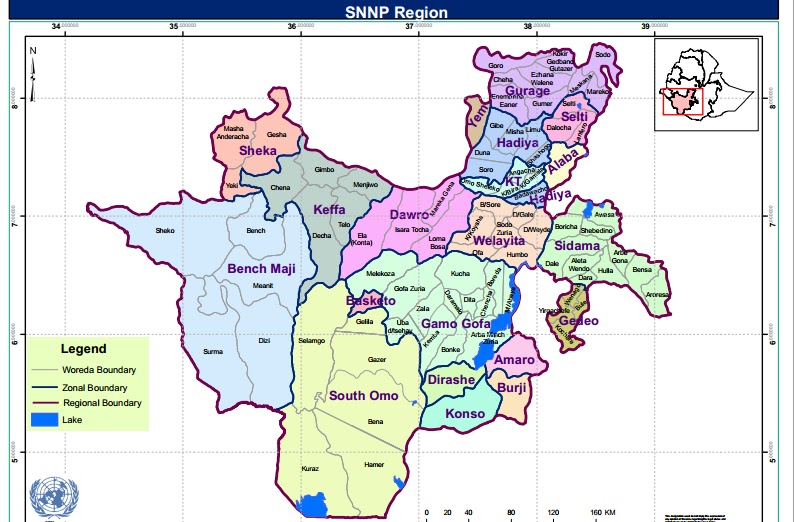
mountainous territory of Kaffa, located some 450km from the Addis Abeba is divided
into ten wordeas, one of them being Menjjeo/Menja. The Menja
communities live 765 kilometers away from Ethiopia’s capital in Sheka zone of
Southern region.A
2007 Census put the total population of Kaffa Zone around 900,000. Kochito’s
1979 and Donald Levine’s 1974 research outputs attest the existence of an
Indian type caste system within the Kaffa (Kafecho) society. The Kafecho were
at the top of the caste system, followed by the Kemmo (blacksmiths) and the
Manjo (hunters) placed at the bottom. Yoshida
(2009) estimates the population of the Manjo to be about 10,000 to 12,000 and
speak the Kafi-noono (Kafa language) language. Historically, the Manjo
had also lived under theKingdom of Kaffa(c.1390–1897) and the main sources
of the discrimination on the Manjo people we are about to read had reportedly began
during the era of the Kaffa Kingdom within that period.
The Manjo have been the
most discriminated, marginalized and oppressed people up until today with
little or no publicity from all stakeholders to address the issue enough. The
Manjo have been treated as sub human by the dominant ethnic group in their
area; the Kaffa and successive regimes that accepted the traditional case
system as official. Tekle (2005) and
Yoshida (2009) list various reasons why the Manjo have been treated as sub human
within their own country. Some of the reasons were: eating habits, custom and behavior.
Eating: As a society of hunter gatherers the Manjo
eat porcupine, colobous monkey and wild pig, and also meat of un-slaughtered
animals and in terms of behavior; the Manjo are believed to dislike education,
like polygamy, and hate hygiene. These were eating and behaviors that were unacceptable
within the dominant society of Kaffa who were Christianized much earlier than
the Manjo. Added with the historical power stratification since the Kaffa
Kingdom, the social, occupational and culture of the Manjo put them at a
disadvantage of being discriminated by their own lookalikes who have similar language,
skin color, geography and ‘blood’. Manjos are not invited to parties,
gatherings by their neighboring ethnic communities such as the Kefecho. They
live excluded in the low lands, and their children are also excluded from sitting
in same schoolroom desks and taking part in school activities by other ethnics. In one interview with an ethnographer, a
Manjo father said “why can dogs enter keffecho’s houses and we (menjos) are not
allowed in?”
The discrimination and
stereotypical racism against the Manjo by the dominant ethnic group of the
Kaffa has been extreme. Yoshida (2009) speaking to individuals from both groups
recorded this,
Some
Kafa people say, ‘The Manjo have nails divided into two. Men have tails at the
back of their heads, and women have tails on their foreheads’. The Manjo regard
the Kafa as liars, ready to deceive the Manjo. And the Manjo also consider the
Kafa as cowards and extremely suspicious, whereas the Manjo are brave and
honest.
The Manjo don’t touch
the coffins of the kefficho and vice versa. Sex and marriage with the Manjo is
seen as polluting, thus prohibited.
Similar to the occupational
and social discrimination observed in other parts of Ethiopia such as on “the Fuga,
the Wayto and the Waata”, there is a noticeable discrimination against the
Manjo in social life (Yoshida, 2009).
Yoshida says the domination
and oppression of the Manjo community exceeds norm and culture and is even exhibited
in manners of clothing and greetings, “When a Manjo happened to wear the same
clothes and shoes that a Kafa wore, the Manjo was, more often than not, beaten
and forced to take them off. Moreover, when a Manjo encountered a Kafa on a
road side, the Manjo was expected to humiliate himself, stepping aside, bowing
and greeting the Kafa with the phrase ‘showocchi qebona’ literally meaning,
‘let me die for you’.”
Yoshida puts the oxymoron
contrasts of the Kaffa towards the Manjo when it comes to food production. The
Kafa people eat honey which is collected by the Manjo but disgust to drink the
Tejj they brew.
The Kafa majorities are
Orthodox Christians and the rest are either Muslim or pagan. Most Manjo have believed
in alamo, or diviner until they were
converted to Christianity in the early 20th C. The intensification of
Christianity in the 20th century; Orthodox and Protestantism in the
Manjo community thus led the population to gradually stop feeding on dead/wild
animals, resulting also in the gradual ceasing of overt discrimination against them.
Halteren wrote in 1996
that the Manjo were for the first time able to own land when the Derg military Junta
came to power in 1974 via the land reform of the 1975. And Petros wrote in 2003
in his Master’s Degree thesis that peasant associations created by the Derg military
junta were given the duty of fighting the old prejudices against the Manjo and
monitoring that they were given equal rights and opportunities. They then began
to elect and be elected including joining the national army.
When the Derg was
overthrown by the current regime in 1991, the Manjo that enjoyed the former’s
protection were left exposed to the angry Kefecho who associated them with the
regime (Yoshida, 2009).
The coming of the
current regime, the Ethiopian People’s Revolutionary Democratic Front (EPRDF)
to power had brought the emerging changes
started by the former Junta backwards. According to a PhD thesis on the Manjo
society written by De Sisto in 2011, the current regime’s ethnic
federalism that defines ethnicity along “linguistic lines” got the minority
ethnic group of the Manjo even more “marginalized”.
As the Manjo speak the language
of the majority ethnic group, the Kaffa, the current regime didn’t legitimize them
to be independent ethnic groups that would enjoy their own ethnic, religious,
economic, political and rights and independence. Most Manjos today argue that
the current regime’s ethnic polices have forcefully assimilated them. Tekle (2005)
asserts the Manjo today suffer again from the regime’s “non recognition and exclusion
from political and administrative powers”.
According to Yoshida’s 2008
article, two educated Manjo elites after studying the habits, customs, discrimination,
injustice and local government oppression, distinctness of their language;
petitioned the government (local) to be recognized as a people, establish their
own special Woreda (District Administration), form their own political party
and for self determination. However, the Federal regime and the local authority
subjectively disqualified their requests saying their population was too small,
have few educated members, and they have the same language and culture as the
Kaffa. The Manjo petitioned again in 2007 but were again refused.
This occupationally induced,
bottled up ethnic discrimination and oppression of the Manjo passed its limit
and level of patience. It sparked an ethnic attack against the Kafecho in 2002
which left hundreds dead, over 2000 houses brunt and around 6000 displaced. The
discrimination and marginalization of the Manjo ethnic minority by the Kaffa
majority and the stifling of their rights by the Federal regime has caused one
of the major ethnic conflicts in present day Ethiopia. Although calm seems to
have pop round, a wind of revenge, fear, mistrust and hostility still underlies
in the region.
--------
This writer recalls the
bold statements of one of the founders and considered by some as the “Father”
of the EPRDF, Sebhat Nega with the Voice of America (VoA) Amharic Service
regarding ethnic rights in Ethiopia since the current regime took power. In his
interview a couple of years ago, the veteran politician said that most
Ethiopian ethnic groups did not previously even know amongst one another before the coming to power
of the current regime and the implementation of its ethnic federalism which he believed
was an achievement in all forms.
A PhD thesis on the
Manjo people by De Sisto completed in 2011 conversely reveals the deterioration
of the status of socially discriminated minorities under the current EPRDF regime.
Strong
arguments by academics depict the fact that there is vivid evidence that the
position of the socially discriminated minorities has worsened since EPRDF’s seizure
of power (Vaughan, 2003; Pausewang and Zewde, 2002).
In recent years, there
have been attempts by the regime and some international charities to fight the discrimination
against the Manjo and effort towards greater equality. One of the forerunning nongovernmental
organizations in this regard has been ActionAid Ethiopia. De Sisto found out in her thesis that
although the discourse of equality has spread in Kaffa Zone and Manjo
communities through the efforts of the NGO and government, the existing
societal values “have barely changed”. “The overwhelming majority of Kefecho continued
to deny the social, economic, political rights of the Manjo and discrimination
is perpetuated in more insidious forms”, she concludes.
Occupational discrimination
is the discrimination of people based on the types of occupation that they are
involved such as against blacksmiths, weavers, potters, hunters and etc. An
attempt by this writer to find legal interventions, policies and proclamation
to deal with the protection of occupationally discriminated groups in the laws
and proclamations of present day Ethiopia did not materialize. It is difficult
to find a single clause or stipulation that on how the rights of occupational
groups are safeguarded in Ethiopia. The
ethnic discrimination and racism perpetuated by the regime has also brought the
nation to an increased level of tension. In previous articles this writer had
argued that Ethiopia needed immediate societal, cultural and/or ethnic
revolutions along with the political. It can be viewed Here. Even if political revolutions may be achieved
in the nearest future, embedding democracy and democratic values could remain wistful
unless and otherwise socio-cultural changes are brought along.
Love
Wins!!!
Ref:
Kochito, W.M. (1976). The Historical Survey of Kaffa,
1897-1935. Unpublished Essay in History. Addis Abeba University, Ethiopia.
Levine, D. N. (1974). Greater Ethiopia: The Evolution of a Multiethnic
Society. Chicago: University of Chicago Press.
Petros, G. (2003)
Differentiation and Integration: Craft Workers and Manjo in social
stratification of Kaffa Minorities of Craft Workers and Hunters in Southern
Ethiopia. Unpublished Master’s thesis. University of Berger, Norway.
Tekle, S. M. (2005) ActionAid Ethiopia Social Integration
Project: Root causes, factors, and effects of Discrimination on Manjo Community
in Kafa Zone: The Case of the Decha and Bitta Woredas. Unpublished Report.
Yoshida, S.(2008) Searching for a way out of social
discrimination: A case study of the Manjo through the 2002 incident in Kaffa.
Nile-Ethiopian Studies, 12
Yoshida, S.(2009) Why did the Manjo convert to
Protestant? Social Discrimination and
Coexistence in Kafa, Southwest Ethiopia, In: Proceedings of the 16th
International Conference of Ethiopian Studies, ed. by Svein Ege, Harald Aspen,
Birhanu Teferra and Shiferaw Bekele, Trondheim 2009.
A charter flight of some 240 Ethiopian Jews is launching the final stages of the aliyah from Ethiopia.
Monday's scheduled flight marks the beginning of Operation Dove's Wings, an Israeli government initiative to bring the remainder of the Falash Mura -- Ethiopians whose ancestors converted from Judaism to Christianity -- to Israel by March 2014.
The Ethiopians are waiting in a refugee camp in the Gondar province before coming to Israel. Some have been waiting for 10 years. The flight is the first of a series of scheduled monthly flights.
Last July, the Israeli government decided to increase the rate of aliyah from Ethiopia in order to complete the process as quickly as possible.
The Jewish Agency's Ibim Absorption Center, a student village in southern Israel located near Sderot, will accommodate up to 600 of the new immigrants. The center was opened with $3.1 million in assistance from the Jewish Agency and $1.4 million from the Ministry of Immigrant Absorption.
A ceremony to welcome the new Ethiopian immigrants will be held Monday featuring Prime Minister Benjamin Netanyahu and government officials, as well as philanthropy officials from Israel and the United States.
U.S. Under Secretary for Political Affairs, Wendy Sherman is to "reaffirm the U.S./Ethiopia partnership" as she travels to the Democratic Republic of the Congo, Rwanda, Uganda, South Africa, Kenya and Ethiopia from October 29 to November 8, a press release stated. The Under Secretary of State is expected to "she will underscore our intent to continue work on the three pillars of the bilateral relationship: economic growth and development, democracy and human rights, and regional peace security" in her final day trip in Ethiopia, it added.
According to a press release from the Office of the Spokesperson Department of State, beginning her trip in the Democratic Republic of the Congo (DRC), Under Secretary Sherman will meet with officials and civilian stakeholders to urge greater progress on security sector reform, accountability, anti-corruption efforts, and to discuss the conflict in the east. In Rwanda, she will engage officials to increase their participation in regional and bilateral political dialogues to bring about an end to the conflict in the eastern DRC. In Uganda, Under Secretary Sherman will focus on the U.S./Uganda partnership in regional security including Somalia and the efforts against the Lord’s Resistance Army, as well as on the importance of good governance and a strong civil society for both democracy and economic growth.
In South Africa, Under Secretary Sherman will lead the U.S. delegation of the first Bilateral Working Group on African and Global Affairs, as announced by Secretary Clinton last August. While in Kenya, Under Secretary Sherman will follow up on Secretary Clinton’s discussions about the importance of free, fair, and peaceful elections in March 2013 and Kenya’s role in advancing regional security.
Ethiopia has suspended preparations for the new exploration licensing round until the end of the year following the death of former Prime Minister Meles Zenawi, according to Ketsela Tadessa, the head of the Petroleum Licensing department at the ministry. The country also plans to set up a national oil company to manage resources, said Minister Sinknesh Ejigu.
“We will be busy reorganizing the blocks and then setting them for companies to come and participate,” she said in an interview in London. Petrobras “also wants to be in the East Africa oil and gas exploration.” A Petrobras official declined to comment.
Explorers are expanding in East Africa, which, except for Uganda, doesn’t have proved oil reserves. Later this year, Tullow Oil Plc (TLW) plans to start drilling a well in the South Omo Block together with Marathon Oil Corp., the latest entrant in a project in Ethiopia.
Petrobras has also drilled for oil and gas off Tanzania in a partnership with Royal Dutch Shell Plc. (RDSA) It will be the largest explorer by market value in Ethiopia, followed by Marathon and Tullow and smaller companies such as Calvalley Petroleum Inc., Southwest Energy andPetroTrans Co., according to the ministry’s website. The nation holds about 5 trillion cubic feet of gas resources.
After repeated instructions and warning the widow of the former Ethiopian Prime Minister Azeb Mesfin has left the Ethiopian National Palace at the end of last week, local sources and press reported today (24 October 2012). It has been reported that the widow had refused to vacate the Palace forcing the new Prime Minister Hailemariam to commute to his Office everyday from his home in Bole Road. Azeb moved into a residence that used to house the ruling EPRDF's officials and ministers in the past.
Mrs Azeb Mesfin had reportedly been ignoring continued instructions to move to a new residence that would also be accorded full security detail.
"The government has given Mrs Azeb and her children the option of three residential villas in Addis Ababa but she is said to have refused to even visit any out of her own security concerns." the Kenyan Daily Nation reported last week. De Birhan has confirmed that the new PM and his family have not yet moved into the Palace.
Heavy clashes have erupted in the conflict-ridden Somali regional state on Sunday night between Ethiopian forces and the rebel Ogaden National Liberation Front (ONLF). Eyewitnesses in Wacays-Godle in Degehbur zone told media in the neighbouring Somalia that Ethiopian imposed a 24-hour curfew in the restive district following renewed clashes, reports Somalilandpress.
The unrest erupted on Sunday night after ONLF ambushed an Ethiopian military convey on their way to Degehbur township. The front claimed victory saying they killed more than a dozen soldiers in the attacks. There was no independent verification and the area is remote, and reachable only by foot. ONLF further stated it sent specially trained commandos to the region to free civilian prisoners.
The fighting re-erupted on Monday and is the worst reported between the two sides in recent months. Residents in Degehbur town said the Ethiopian army and the Liyu police swept through the town and neighbouring villages for second straight day in mass arrest of ethnic Somali civilians. At least 80 civilians have been taken away in the latest attempt to create panic and terror. There was no immediate word on the situation Tuesday, but residents said the violence led to massive displacement of people and considerable loss of property.
The violence comes days after peace talks between the Addis Ababa government and ONLF ended in the Kenyan capital without a breakthrough. The faction accused the government of blocking peaceful means to end one of Africa’s longest running conflicts.
The group accused Addis Ababa of blocking negotiations by urging them to accept the Ethiopian federal constitution as precondition for further mediation. They said the constitution was a tactical move on Ethiopia’s behave to derail mediation efforts arguing the paper did not reflect the wish of the region’s ethnic Somalis. Just yesterday reports in Jigjiga, the administrative capital, said the Federal government ousted the region’s Somali leader (see Ethiopia sacks the president of Somali Region).
Some of the locals blamed the latest unrest on three candidates for the state’s presidency. They claimed the Ethiopian government would only replace the sacked regional president with an individual with tough image and fear. So now the three possible replacements are out trying to outdo each other in battle grounds. ONLF has been engaged in a simmering conflict with the government for nearly three decades and claimed the lives of hundreds of thousands of people.
One police officer and two civilians died in a Muslim Council election related violence in Degan town of South Wello, Northern Ethiopia, Ethiopian State Television, ETV reported tonight.
The State Television said "the violence started when a group extremists started throwing stones on the houses of those who took part in the election of representatives for the Islamic Council, Mejlis, in the Southern Wello town of Degan yesterday". Although police quelled the violence and arrested the leader of the group, a larger group of "extremists" later came enmasse to free the leader of the Group who was under police custody, it added. Police said, the group left one police officer wounded and killed another. "Two extremists who lead the violence were killed thereon and the violence is now under control" ETV reported quoting South Wello Zone Police.
While the Ethiopian Satellite Television (ESAT) quoting one of the youth who was freed by the support of the people stated that the conflict was started when police tried to arrest two Muslim youth and the people attempted to get them freed. De Birhan has just learned that mass arrest is underway in the twon of Kombolcha which is the nearest and biggest town to Degan.
A man has killed his wife firing 18 bullets and wounding three others today at 8 am around Olompia, Addis Abeba. According to an Addis Abeba based Radio Program Tadias Addis on Sheger102.1 FM, the unnamed husband shot his wife after chasing and blocking her car around the spot of killing.
Inspector Tsegaye Balcha of the Addis Abeba Police Commission told the Radio Program that the cause of the homicide is suspected to be a social problem between the husband and wife. The two reportedly have two children and since their separation the husband has been complaining that he has been denied from visiting and seeing his children who are staying with the mother. The deceased mother and three others have also been wounded. The mother of the deceased is one of the wounded. The husband has been apprehended and investigation is underway.The Kalashnikov Rifle he used is also under police exhibit.
Writing
like politics is addictive. For some, writing may sound, writing anything, a
white collar job where one does not have to laboriously toil in the sun and
sweat. For many, I know of, writing is
the toughest task. In fact, it is not an
easy venture; especially writing some articulated, creative and deep articles
requires so much reading, listening, thinking and above all; practice. The “Practice
makes perfect” expression correctly applies to this art. And once involved in
any profession that has writing at its core as a profession, it tends to be very
hard to get off. Going to bed without writing any piece makes you feel under, unfulfilled
and missing; so say politicians “once you get into politics it is hard to get out”.
One of the most popular
genres of writing is journalising. Not academic journalization but mass media
journalism. Fact and truth based; journalism requires no fiction and creativity. The only room for mixing fiction and showing the creativity and
articulation of the journalist is when writing features or analysis. Journalism is a very exhilarating and embracing
profession, and when practiced professionally it pays a lot back. Out of the
many ways of analyzing journalists and journalism in Ethiopia is via geographic
scales; journalism from home or exile.
Ranking number one with exiled journalists in the world, Ethiopia now
has got more émigré journalists than other countries in the globe. Although a
2008 figure shows that the government media alone employees over 1600 journalists,
in the real sense of practicing ‘journalism’, few in the private media could be counted as “less
biased and professional journalists”. Bias and professionalism in journalism has
a lot to do with geography (where the journalist is located); meaning that home
based journalists level of “bias and professionalism” gets directly influenced
by their employers, the political and economic situations of the country,
internal and external pressures and family to mention few. Exiled journalists also
work under a level of “bias and professionalism” that is directly influenced by
their employers, the political and economic situations of the country, internal
and external pressures and safety of their families at home. While similar scenarios
of influence exist in journalists of the two geographies, broadly speaking,
exiled journalists are less influenced by the above variables than those inside
the country. Exiled journalists mostly those settled in wealthy and democratic
Western countries are freer from political, economic, security and other influencing
factors unless they openly support, endorse or join a certain opinion group or
cause. Thus, although too quick to conclude that exiled journalists are less
biased and more professional than home based comparative degree of professionalism
is exhibited by journalists who write far from home. This does not include
those media outlets that are opposition to or pro regime but those that are fairly
unbiased.
Ethiopian
journalists in the Diaspora wear two hats; a hat of an independent foreigner who has a new home
but also analyses his motherland through a different prism and another hat of a
concerned, stake holding Ethiopian journalist who writes from a native
Ethiopian perspective. The serene amalgamation of these two hats put a Diaspora
based journalist at relatively balanced station. I find exiled Ethiopian
journalists who simply feel exalted because they are not living in Ethiopia to
witness the persecution and torture of their fellow journalists under vague
pretexts; they believe being there and being unable to do anything about it is equivalent to being an accomplice. Some may
find this analogy a bit exaggerated but the claimers have some truth in deed.
At times accusations go
on both directions in terms of quality and courage in journalism. Diaspora
based journalists accuse local journalists of being unable to “dig, uncover and
investigate critical issues happening in their proximity”, on the other hand,
home based journalists accuse exiled journalists as “quick generalizers and forcing
their fellows to do what they haven’t done or couldn't”.
Unquestionably, since
the promulgation of the 2009 Anti-Terrorism Proclamation, journalism in
Ethiopia has become a “No fly or fly with a caution Zone”. In addition to its
many restrictive and repressive clauses, the 2009 Proclamation goads locally
based journalists on “what, who and how to report”. How can a free mind be
steered by government? This is a profession of freedom and truth that is free
of regime guidelines and orders but when the tiny space that had been opening
for “real journalism” to flourish is closed, it does really make them work with unexplained heaviness. This notorious Proclamation, as most agree, made journalizing
in Ethiopia since 2009 more of a “workshop Journalism” variety. This decree now
serves as one of the main causes of seeking asylum for Ethiopian journalists.
Many accomplished Ethiopian journalists have either fled the country or changed
their fields just because of this Proclamation. The Proclamation reversed
Ethiopia’s “promising media growth” back to the days of the Mengistu Dictatorship
when freedom of expression was legally censored to protect the “Revolution”
while now it is done in the name of “security”. Kenya is reportedly to have a similar law. Taking
all these into consideration, it sounds rather good to appreciate these home
based few remaining “private journalists” who are doing their best to journalize.
Although Diaspora based journalists still lead in producing breaking news,
reports and analysis on local matters distant in thousands of miles from home, the
weakness or inability of local based media personnel to feed the public with at
least “robust” news and reports and corroborate with their distant fellows is visibly
lifeless. In the past, foreign media correspondents in Addis Abeba used to be the
first to publish breaking news, investigate and reveal uninvestigated stories in/about
Ethiopia.
Today, the role of
“professional” Ethiopian journalists is being replaced by young budding and courageous
citizen journalists. Ethiopian bloggers are these days functioning as the “the
first news revelers, courageous, specialized and ‘unbiased’ alternatives” to
traditional and established mass media found both inside and outside the
country. A citizen media project of nine young Ethiopian professionals, who
hail from fields as varied as law, Engineering, Economics, teaching, and many
others, Zone 9 Blog, is one of the few most popular, independent and tuned to
media outlet. In addition to this team of bloggers, a number of Ethiopia based
bloggers and online activists are serving the public as promising and better sources
of news, education, entertainment and communication. These citizen journalists are
not employed by any organization but journalize out of personal interest, wanting
to be alternatives voices, to vent out buried talents and opinions, and their
ambitions to sociliase. Therefore, they serve the missions and goals of no
corporate media organization meaning minimal room for bias to any group unless they
come from a certain organ or explicitly demonstrate their stands and views in
their writings. The budding Ethiopian citizen journalists are surely becoming
some of the indisputable alternatives to corporate owned traditional media and
journalists of Ethiopia. Ethiopian citizen journalists, however, still have a
long way to go. Most of them are unaware of most journalistic technicalities,
ethics, law and practices. These shortcomings are present across the board; in
most citizen journalists found elsewhere in the world. It can be ameliorated either
by giving journalism training to the citizen journalists or integrating few professional
journalists into their teams.
There are exiled
Ethiopian citizen journalists too. Most exiled/ethnic media practice a type of journalism
called opinion or advocacy journalism; they simply endorse and advocate an organization,
cause or idea. Few other ethnic media wallow between the poles of being an
independent medium, bias, professionalism, finance, human resources and other
conflicts of interest. Plus to the above few, exiled Ethiopian journalists suffer
from racism and lack of opportunities in their new home, shadowing, lack of
full info and remoteness from news events occurring at home and many other
problems. Practiced with relative freedom and independence, journalization from
exile comes with its own consequences.
Exiled journlaisation
also affects the employability of Ethiopian journalists: as hectic and
requiring as life in the West is, these journalists have to supplement their
incomes and life with extra job unrelated to media work. Therefore, potential
employers in most cases go through the media outputs that these journalists
have produced. If the employer finds an article or program produced by the
journalist that goes against the principles, views and interests of the
employer in any way, the employability of this part time journalist gets
compromised. Not only this, but when
filing applications for University courses, trainings, events, campaigns, and
many other duties and roles that require your full CV, the problem also occurs.
Saying you are a journalist and applying
for say an administrative or sales job in another organization gets you good off-putting
responses. Some non media organizations consider employing a journalist is like
“inviting trouble”, calling for an investigative journalist to watch you, appraise
you and finally expose you. No to muckrakers.
Thus ignoring the Jo thing from ones CV or appearing a ‘lapdog journalist” becomes
unexceptional to get good jobs, benefits or promotions. This is a firsthand experience of many
fellows. People, employers or other
stakeholders judge you by what you journalize than have a holistic view and
reading of oneself.
Most exiled Ethiopian
journalists don’t continue to be journalists once they leave their homeland.
Constrained by lack of language, proper training, experience and skills; they
join other types of trade such as cleaning, construction, caring and the like.
This trend has been improving these days, assisted by journalist rights groups
and other international organizations exiled Ethiopian journalists (mostly
those in the U.S.) are now pursuing further studies or establishing their own
Radio, TV programs or newspapers for the Diaspora community.
To conclude, this
opinion piece was not intended to compare exiled and local journalists but to reflect
on the emerging Ethiopian citizen media and journalists and support it by analyzing
it against the former two. The future is brighter with Ethiopian citizen journalists!!!
The second round of peace talks between the Ogaden National Liberation Front and the Ethiopian government mediated by Kenya was held in Nairobi between 15 to 17 October 2012. Abdirahman Mahdi, ONLF Foreign Bureau Secretary, led the ONLF delegation. The Ethiopian delegation was led by the Defense Minister Seraj Fegesa. The Kenyan government mediation team was led by Kenyan Defense Minister H.E. Mohamed Yusuf Haji. The Kenyan government hosted the talks.
The Ethiopian government requested the Kenyan government to facilitate talks with the ONLF. Then the Kenyan government approached ONLF, who accepted the invitation to engage in the process in a genuine and principled way.
In the first formal talks, the process went smoothly and the parties reached an agreement on the modalities, general principles and an agenda for the talks.
In the second round of the talks, the Ethiopian government delegation did not respect the principles agreed upon. These stated that “the holding of negotiations must be in accordance with mutually acceptable principles and no preconditions shall be made to negate the inherent character and purpose of the peace negotiations.” Instead the Ethiopian delegation tabled a contentious issue that was a key element of the conflict, by insisting that the continuation of the talks depends on the ONLF accepting the Ethiopian constitution. Unfortunately, the Ethiopian delegation blocked any attempts for the talks to move forward by imposing this precondition.
The ONLF position on the constitution is that it must reflect the will of the people and that the Somali people never exercised a referendum on the constitution. ONLF believes that the solution of the conflict in the Ogaden can only be achieved by accepting the principles of the right to exercise their self-determination without any preconditions or restrictions.
The peace process is supposed to address differences between the two sides on all issues. The ONLF proposed that the parties continue to talk in the spirit of the initial agreement and start with confidence building measures that will lay a fruitful and conducive environment for tackling the impasse at a later stage.
The ONLF is willing to continue engaging in a principled peace process with the Ethiopian government.
The Eastern region of Ethiopia including Harar, Dire Dawa and Ogaden have been affected with total power and water outages for the past two weeks. The region is known for its warmth and heat that survival without water or power will worsen the already difficult livelihood. The Ethiopian Electric Corporation today announced that the region will region power in the coming four days. It said the cause of the outages was "burglary of power transformers and cables". Although Ethiopia frequently attested that it is building dams and is even exporting electricity to neighboring countries, most regions and cities of the country suffer from regular power interruptions and outages.
Ethiopian national football team has qualified for the 2013 Africa Cup of Nations by beating visiting Sudan 2-0 in this weekend's return leg of the final qualifier. Ethiopia host Sudan this Sunday, October 14, at the Addis Ababa stadium trailing 5-3 from last month's encounter in Khartoum. The aggregate being 5-5.
Congrats to the Ethiopian National Football team for making it to the CAF African Cup 2013 in South Africa for the first time in 31 years.
Kudos the Coach Sewent Bishaw too! The De Birhan Band is Glad!