Tuesday, September 4, 2012

Vegetable shortage hits Addis

By  Derese Tariku
De Birhan Media Staffer 

04 Sep 2012

Addis Abeba has been hit with vegetable shortage due to what some sources said was "a price ceiling imposed by the post Meles regime on vegetables". Wholesalers in the Ethiopia's largest vegetable market, said that they have stopped supplying vegetables due to the new ceiling. 

Similarly, although the government imposed  a price cap  of 1300 birr on Ethiopia's staple  food,  Teff,  the cereal has been sold for 1800 birr so far. Following rumors that the regime wants to cut the 500birr increase, Teff has been unavailable in the main markets of Addis Abeba.  De Birhan has been able to confirm that most wholesalers in Mesalemia and Ehel Berenda markets were not selling Teff today. 

Monday, September 3, 2012

Ethiopia’s ruling party to meet tomorrow

By Tewodros, De Birhan Media Staffer
September 03, 2012
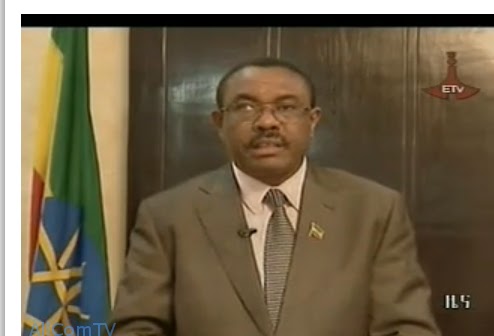
Hailemariam Dessalgne stands as he addresses the public, Sep.3, 2012
Ethiopia’s ruling  Party’s (EPRDF) Executive Committee is set to meet  tomorrow to elect (discuss on) the new Prime Minister of the Country and Chairperson of the Front. Following the death of Meles Zenawi, the Party has remained without a Chairperson. Hailemariam is the current Deputy Chairperson  of EPRDF.
Although the government Communications Office had stated that Hailemariam would be the Acting PM until the Parliament fully approves him, his new title was used for only few days. State media restarted calling him with his previous portfolio of Deputy Prime Minister and Foreign Minister.
There are reports that due to pressure from the Tigrean People’s Liberation Front (EPRDF’s mover and shaker), the Front might propose another Prime Minister and Hailemariam might not be selected as Prime Minister. Other political commentators state that Hailemarim could be approved as the Prime Minister of Ethiopia  until the next election in 2015 and run the nation as a “Medvedev  for a group of Putins”. The security apparatus and core power still is in the hands of TPLF. 
Hours ago, Hailemraim gave a Live TV address on the State Tv, ETV and vowed that the policies and visions of the late Prime Minister would be continued without any change. He thanked the public for the “decency” shown over the past 15 days since the death of the late Prime Minister was announced.
The Front’s press release sent out today stated that the Front’s Executive Committee will begin its regular meeting tomorrow at the Party’s Office in Addis Abeba and will discuss on the implementation of the Growth and  Transformation Plan (GTP), budgets of the just ended fiscal year, preparations to better execute the late Prime Minister’s visions, other agendas that  will be raised by the attendants and passes decisions.
The Party sent out this release earlier today in Amharic, 
የኢህአዴግ ስራ አስፈፃሚ ኮሚቴ ነገ ነሐሴ29/2004. መደበኛ ስብሰባውን ያካሄዳል
በነገው ዕለት በሚጀመረው የግንባሩን ሥራ አስፈጻሚ ኮሚቴ መደበኛ ስብሰባ የዕድገትና ትራንስፎርሜሽን ዕቅዱ አፈፃፀም ይዳስሳል፡፡  ሥራ አስፈፃሚ ኮሚቴው የ2004በጀት ዓመት አፈፃፀሞችን በመፈተሽ የግንባሩ ሊቀመንበር የነበሩትና የባለ ራዕዩና ታላቁን መሪ የጠቅላይ ሚ/ር መለስ ዜናዊን ህልፈት ተከትሎ በሰፊው የኢትዮጵያ ህዝብ የተስተጋባውን ቁጭትና የታላቁን መሪውንና በእርሳቸው የተገነባውን የግንባሩንና የልማታዊ መንግስታችንን ራዕይ ሁሉም በየተሰማራበት በመረባረብ ለማስቀጠል የገባውን ቃልና መነሳሳት የሚመጥን ዝግጅት ማድረግ በሚቻልባቸው ሁኔታዎች ዙሪያ እንዲሁም ከቤቱ በሚነሱ ሌሎች አጀንዳዎች ዙሪያ በመምከር ውሳኔዎችን ያሳልፋል ተብሎ ይጠበቃል፡፡

Sunday, September 2, 2012

Mourners Attend Funeral of Ethiopia’s Meles


Thousands of mourners gathered Sunday along with many African leaders for the state funeral for Ethiopia's longtime leader Meles Zenawi.
Mr. Meles died in Belgium last month at the age of 57 following a lengthy illness. He ruled Ethiopia for more than 20 years.
Sunday's state funeral, in the capital, Addis Ababa, was attended by dozens of dignitaries including Rwandan President Paul Kagame, Ugandan President Yoweri Museveni and former South African president Thabo Mbeki.
South African President Jacob Zuma said Africa had “lost one of the greatest sons of the continent”, while the U.S. ambassador to the U.N., Susan Rice described him as an “uncommon leader” and a “rare visionary”.
The late prime minister Meles earned praise abroad for improvements in the economy, education and health care. But human rights groups sharply criticized him for various abuses, including restrictions on independent media.
Following the ceremony, Mr. Meles' casket was carried to the Holy Trinity Cathedral, where he was buried next to other prominent leaders of Ethiopia, including former Emperor Haile Selassie.
Under Mr. Meles, Ethiopia fought a border war with Eritrea and sent troops to Somalia to fight Islamist militants. Mr. Meles came to power in 1991 after his rebel alliance, the EPRDF (Ethiopian People's Revolutionary Democratic Front) seized power from the country's former Communist regime.

Saturday, September 1, 2012

Regime forces Merkato merchants to pay tribute to Meles' body

By Derese Tariku , De Birhan Staffer 
01 September 2012


Addis Abeba - Ethiopian authorities have disputed with merchants in Ethiopia's largest open Market, Merkato when they attempted to force the merchants to pay tribute to the coffin containing the remains of the late Ethiopian Prime Minster Meles Zenawi. The coffin containing the remains of the late Prime Minister is being visited at where it is temporarily kept at, the National Palace. He is set to be buried tomorrow. 

One merchant who was at the scene told De Birhan,
We were doing business as usual in the morning but in the afternoon, district and city officials of the regime came and asked us to come together and pay tribute to the remains of the Meles Zenawi. When we refused to do as we were all busy working, they forced us to close shops and join the march to the Palace. After some squabble, most of us closed our shops earlier than usual and headed to our homes. The squabble was non violent and lasted for a while. 
According to the businessman, some of the merchants had already been to the Palace to pay tributes individually or with other groups and the rest didn't want to visit the remain at all. It has been reported the past few days that the regime has been ordering civil servants and residents to attend memorial ceremonies to the late PM at various places. Meles Zenawi's coffin was kept for nearly two weeks at the  National Palace in Addis Abeba. Dignitaries, presidents and ambassadors from various African countries and other continents are  arriving in Addis Abeba to attend  Meles Zenawi's funeral tomorrow at the Holy Trinity Cathedral. 

Friday, August 31, 2012

Ethiopian POW in Eritrea "could be freed soon"

By Tewodros, De Birhan Media Staffer 
31 August 2012

Colonel Bezabih Petros

Ethiopian prisoners of war (POW) in Eritrea such as Colonel Bezabeh Petros (younger brother of opposition politician Prof. Beyene Petros), Colonel Tadesse Muluneh and many others arrested during the 1998-2000 Ethio-Eritrea border war and other times by the Eritrean regime could soon be freed, a member of the exiled Ethiopian Orthodox synod, His Eminence Abune Mekarios indicated. 

The Abune, who heads Ethiopian Ortodox churches in North America and Asutralia said this in a recent interview he held with ESAT Radio from Eritrea. Abune Mekarios said that he went to Eritrea to seek amnesty for Ethiopian  prisoners arrested in Eritrea from the Eritrean regime.  The religious figure said, 

I have met with most high ranking officials of the Eritrean government and held successful decisions with them. They have promised me that they will all be released soon. Anticpate for a joyful announcement
Colonel Bezabeh Petros is one of the most proficient Ethiopian air force members popular for his "heroic acts" during the Ethio-Somali war of 1977-78. A father of 3 boys and two girls, Colobel Bezabih was hit in 1984 in Eritera when he was flying his fighter mig jet and served as prisoner of war for 8 years in sahel desert . When the Derg regime fell and the current regime came to power, Col.Bezabih was freed and he resumed his flying career as top flying instructor until   his plane was hit in May 1998 and he was captured by the Eritrean regime this time.  He has been imprisoned since. 

Colonel Tadesse Muluneh, an Ethiopian air force pilot during the previous regime and one time leader of the Eritrea based Ethiopian Peoples Patriotic Front (EPPF), was detained in Asmara last
year and has been arrested in 2011 from his home in Asmera. Col. Abebe Geresu, a defecting soldier from the current Ethiopian army and later founding and executive committee member of Tinsae Ethiopia Patriotic Union (Tinsae Ethiopia), has been arrested in Eritrea in March 2012.  In addition, to these figures, there are thousands of Ethiopian civil and war prisoners in Eritrea that were captured in different occasions.

District Youth Forum members attending Meskel Sq. In memoriam of Meles

By De Birhan 
August 31, 2012 
In the successive events that are being held in memoriom of the late Ethiopian Prime Minister Meles Zenawi, a young man Youth Forum Representative from Arada Sub city speaks on how they had organised youth to take part in today's ceremony. Youth Forum are wings of the ruling EPRDF found at each district level of the country and work to address youth issues

Thursday, August 30, 2012

Empty funeral tents; a passerby exposes regime

By Tewodros, Staffer of De Birhan Media
30 August 2012

The next video shot by a citizen reporter shows one of the many funeral tents built by the regime to remember the late Prime Minister of Ethiopia Meles Zenawi. Despite what the regime has successively been showing " a large mass of public weeping and sorrowed with the death of the PM" , this video shows an empty tent with no attendance. The man that is accidently shot in this clip is heard saying to another woman "Go to the tent, if you talk/say something, they will pay you five birr". What the State TV doesn't show, citizen media do as in the next clip. 

Wednesday, August 29, 2012

USAID Ethiopia has a new Mission Director

By De Birhan 
29 August 2012 

Dennis Weller
Dennis Weller

Dennis Weller has just been sworn in as the new Mission Director of United States Agency for International Development (USAID) in Ethiopia. Thomas Staal was USAID’s mission director in Ethiopia before he left for  Iraq.

Dennis was sworn in as USAID's mission director in Rwanda in March 2008. There, he leads USAID’s programs in health, HIV/AIDS and malaria; economic development; and democracy and governance. 

A career Foreign Service Officer, Weller most recently served as deputy director of the Agency's mission in Ghana, where he administered four U.S. presidential initiatives to alleviate hunger, improve education, increase growth and trade, and fight malaria.

Weller has 25 years of experience with USAID, including work in Burma, Pakistan, Kenya and Iraq. Much of his work has focused on providing emergency food aid and improving agricultural growth to avert hunger and ensure economic development. He began his career as a Peace Corps Volunteer in Malaysia.

The United States Agency for International Development (USAID) is the United States federal government agency primarily responsible for administering civilian foreign aid. President John F. Kennedy created USAID in 1961 by executive order to implement development assistance programs in the areas authorized by the Congress in the Foreign Assistance Act

Tuesday, August 28, 2012

Ethiopia: Army Commits Torture, Rape : Human Rights Watch

August 28, 2012
Human Rights Watch


(Nairobi) – The Ethiopian military responded to an April 2012 attack on a large commercial farm in Gambella region with arbitrary arrests, rape, and other abuses against scores of local villagers. Forced displacement, inadequate resources, and other abuses against Gambella’s population persist in the second year of the government’s “villagization” program.

On April 28, 2012, unidentified armed men attacked the compound of Saudi Star Agricultural Development Plc., a company that has leased thousands of hectares of land for rice farming in Gambella region. The gunmen killed at least one Pakistani and four Ethiopian employees. Gambella residents interviewed by Human Rights Watch said that in the following days and weeks, Ethiopian soldiers went house to house looking for the gunmen in villages near the Saudi Star camp, arbitrarily arresting and beating young men and raping female relatives of suspects.

“The attack on Saudi Star was a criminal act but it does not justify reprisals against Gambella’s population,” said Leslie Lefkow, deputy Africa director at Human Rights Watch. “The Ethiopian government should put an immediate end to abuses by the military in the region and investigate and prosecute soldiers found responsible for these heinous acts, regardless of rank.”

Human Rights Watch has previously reported on the Ethiopian government’s policy of “villagization” or resettlement of Gambella residents from their traditional lands to clear the way for the commercial farms. The government has used threats, intimidation, and violence against those who resist moving.

Hundreds of villagers from Abobo woreda (district) fled the military operation and crossed into neighboring South Sudan in the months since the attack on Saudi Star. In June Human Rights Watch interviewed more than 80 recent arrivals from Gambella in South Sudan.

Witnesses described to Human Rights Watch the military’s human rights abuses against people in the vicinity of Saudi Star. The day after the Saudi Star attack, Ethiopian soldiers shot and killed four of the company’s Anuak guards, accusing them of complicity in the attack. In April and May Ethiopian security forces entered the five villages closest to the Saudi Star compound in Abobo woreda, rounded up scores of young men and detained them in military barracks in Gambella. Many alleged that they were tortured.

One former detainee told Human Rights Watch: “They said we were to go into the bush and show them where the rebels are – with whom they claimed we had a relationship. They beat me after I said I didn’t know where the rebels are. After they beat me they took me to the barracks. I was in custody for three days. At night they took me out and asked me to show them where the rebels are. I said I don’t know. So they beat me and took off their sock and put it in my mouth to stop the screams.”

Human Rights Watch heard six accounts from women and girls of rape by soldiers either in their homes or in detention, when the soldiers could not find the male relatives they were seeking.

Numerous credible sources in Gambella believe the April attack is linked to the government’s villagization program and the leases of land. The attack followed a March 12 attack by armed men on a bus in Gambella in which 19 people were killed. It is not clear whether the two incidents are linked.

The gunmen who carried out the attacks have not publicly identified themselves or their motives, but one man interviewed by Human Rights Watch claimed to have been among the group who attacked the Saudi Star compound. He said that the April attack was in retaliation for the land leasing by Saudi Star and other foreign investors in Gambella region.

Most of the attackers were reportedly captured in May by the Sudan People’s Liberation Army (SPLA) in Pochalla, South Sudan following a gun battle that left four of the attackers and two SPLA soldiers dead. Tensions have remained high in Gambella since.

“The military’s abusive response to the Saudi Star attack is only making an already turbulent situation in Gambella worse,” Lefkow said. “After what the people in the region have suffered at the government’s hands, the only thing that will begin to clear the air is a comprehensive and independent inquiry into the situation.”

Villagers who recently fled Gambella to South Sudan reported new abuses by the security forces under the villagization program. They reported a persistent lack of services in the sites to which they had been moved, despite government pledges to provide them. And existing villages from where people were moved are being destroyed to prevent people from returning to their original homes.

Human Rights Watch urged the Ethiopian government to stop the arbitrary arrests, beatings, and intimidation of Gambella residents and to release those who have been arbitrarily detained. The government should investigate and prosecute military personnel and officials implicated in human rights violations associated with the villagization process.

Many of those forcibly displaced by the villagization program are indigenous people. Under Ethiopian and international law the Ethiopian government needs to obtain the free, informed, and prior consent of indigenous people it wishes to move and compensate them for their loss of assets and land.

“The abuses we found in the government’s relocation program in Gambella a year ago are still happening today,” Lefkow said. “Whatever the government’s rationale for ‘villagization,’ it doesn’t justify beatings and torture.”

Details about arbitrary arrests, beatings, and torture; rape and sexual violence; and attacks and “villagization” in Gambella follow.

Arbitrary Arrests, Beatings, and Torture
Between June 23 and June 29, Human Rights Watch conducted a research mission to Gorom refugee settlement, South Sudan, and interviewed 80 people who had fled the crackdown and villagization in Gambella.

Several dozen Gambella residents described to Human Rights Watch the Ethiopian military’s mass detention of scores of villagers, primarily young men, in Abobo woreda in late April and May, accusing the villagers of supporting what the soldiers referred to as “the rebels.”They said that men, women, and children were forced to march through the bush looking for so-called rebels and were beaten if they did not find any, or if they did not provide any names of suspects to the soldiers.

One man described being stopped by soldiers while carrying food, and then being forced to help them search for firearms in Perbong village near the Saudi Star farm. “The [soldiers] asked me ‘Where are you taking this food? To the rebels?’” he told Human Rights Watch. “They checked the food, told me to lie down, and beat me all over my back. [They said]: ‘We will take you to Perbong to check houses one by one. If we find a gun, we will kill you.’ So we went to the community leader’s house, my house, and others’ houses and they found nothing, so they released me.”

A dozen villagers said they were detained, then beaten and tortured in military barracks by soldiers until they revealed a name of an alleged rebel. Most victims described frequent beatings with sticks and rifle butts. Some also saw or experienced other forms of torture.

An 18-year-old named Omot told Human Rights Watch that in April he was arrested by soldiers in his home village and accused of being a rebel. He was taken with his arms tied behind his back to the military barracks in Pugnido where he was detained for two months. He said he was beaten daily on his back and legs with truncheons. After his release soldiers came to his home and threatened him again, causing him to flee to South Sudan.

A local police officer described being arrested by soldiers and accused of supporting the rebels. Soldiers detained him in Gambella’s military barracks where they tied him up and beat him repeatedly, often at the urging of a federal government security official who told them, “Beat him, he has something to say.” After his release the soldiers came to his home and beat him unconscious in front of his wife. His wife said the soldiers beat their four year old son in front of them. The family fled to South Sudan.

Ethiopian soldiers detained and tortured people in locations in addition to the military barracks. One witness said he was detained in a makeshift prison within a school in Chobo-Mender and witnessed soldiers torturing a young man by making him walk on hot coals. He told Human Rights Watch:“I saw a young guy who was forced to stand barefoot on fire coals for 15 minutes. Soldiers would push him back on whenever he would try to get off. He was blistered half way up his calves. ‘I am going to die,’ he would say. ‘Then show us where the rebels are,’ said the soldiers.”

Another local police officer described being beaten and tortured inside Saudi Star’s compound by Ethiopian soldiers shortly after the attack: “They said to us, ‘As people are being killed, yet you have not died, you must know who was behind this.’ So they took me to the Saudi Star farm and beat me there, inside the compound. There were many of us there: two police and others who had been picked up in the sweep. When they saw that I was not ready to talk, to say what they wanted me to say, they started removing my toenails. They were asking a lot of questions about the others who died: ‘Don’t you know who did the killing?’”

All youth appear to be at risk from the soldiers. An 18-year-old student at Addis Ababa University in Ethiopia’s capital said that soldiers beat him and his friends when he returned to Gambella for a vacation shortly after the Saudi Star attacks. After showing his student ID card he was told by soldiers: “You are educated, you know all the political issues and things about governments so you are the ones encouraging the rebels.” They beat him unconscious.

Rape and Sexual Violence
Ethiopian soldiers frequently arrested and abused the female family members of young men they were seeking. Three women and a girl told Human Rights Watch that soldiers arrested, detained, beat, and then raped them to pressure them to disclose their male relatives’ whereabouts. Two additional women said that they witnessed other women being raped in detention.

One woman said her husband had been arrested after the attacks because “the soldiers said he knew where the rebels were.” When she went to the prisons to try and find him, soldiers followed her back to her home and raped her, she said. Her husband’s whereabouts remain unknown.

Another woman described what happened after soldiers arrested her in Wancarmie and took her to the military barracks in Gambella: “One night they took me out of the cell and said, ‘Show us where your husband is or else we will rape you.’ I persisted saying that I didn’t know where he was. Then finally they raped me. After that they released me and I decided to leave the country.”

Attacks and “Villagization” in Gambella
After the attack on the Saudi Star compound the Ethiopian military targeted five villages, all within a 16-kilometer radius of the area leased by the company. These villages had been affected by Ethiopia’s controversial “villagization” program, a three-year plan to relocate 225,000 people in Gambella – and over 1.5 million people across four states nationally – from their existing villages into new settlements purportedly to better provide them with basic services.

Human Rights Watch documented serious human rights violations associated with the first year of the villagization program in Gambella in 2011. The January 2012 report Waiting Here for Death”: Displacement and “Villagization” in Ethiopia’s Gambella Regiondescribed how the Ethiopian government and military forced reluctant villagers to leave their homes and build new villages in arid, infertile areas, often intimidating, arresting, and beating people who refused to move. The most abuses were recorded in Abobo woreda, the location of the Saudi Star concession.

Many of the recently arrived villagers in South Sudan interviewed by Human Rights Watch in June said they had fled Gambella because of abuses experienced in connection with the villagization program, as well as the recent military operations following the Saudi Star attack.

They described new abuses in the second year of the government’s villagization program, including forced displacement, arbitrary arrests, and torture in detention. The new settlements are located far from water sources and the land is typically dry and arid. More than a year after people were forced to move to these villages virtually none of the promised basic services such as schools and clinics have been provided. To prevent resettled villagers from returning to their original homes soldiers have allegedly been destroying infrastructure in the old locations.

All of the Gambella residents interviewed by Human Rights Watch and who fled to South Sudan told Human Rights Watch that their resettlement was involuntary.

A 17-year-old girl from Abobo woreda who had recently arrived in South Sudan said that soldiers killed her father when he refused to move from their farm near Tegne to the new village: “We were sitting at our farm and soldiers came up to us: ‘Do you accept to be relocated or not?’ ‘No.’ So they grabbed some of us. ‘Do you want to go now?’ ‘No.’ Then they shot my father and killed him. We all fled into the bush. I still do not know where my sister or husband is.”

Human Rights Watch found that regional and state government officials appear to have a role in the forcible relocation of villagers. The former committee head responsible for villagization in Gog woreda told Human Rights Watch: “I was told [by regional officials] to make the community aware of the need to move. All the responses from the people were rejections, they did not like it. We went back and did our report [to the regional parliament] that they did not want to go. Parliament blamed me and said, ‘Why do you tell us this? Go do it by force.’ [A senior state official] said this to me directly. We then went with the military and did it by force.”

Villagers who have been unwilling to move or refuse to mobilize others to do so have been arrested and mistreated by the soldiers. An elder from Batpul village said he was ordered by woreda officials to organize the villagers and persuade them to relocate. “There were many trees and food in the old place and nothing in the new place so I refused to get them to agree,” he said. “Government officials told me, ‘Since you do not accept what government says, we jail you.’” The elder was jailed in Abobo for 17 days. “They turned me upside down, tied my legs to a pole, and beat me every day for 17 days until I was released.”

Soldiers burned down tukuls (huts) and broke water pumps in the original villages as soon as villagers were moved to their new locations, the displaced villagers told Human Rights Watch.

One man from the Majangere ethnic group, who lived in Gooshini village in Godere woreda, described the forced relocation in his village: “Those that resisted the second time were forced by soldiers to roll around in the mud in a stagnant water pool then beaten.” He said he returned to his old village after dark for seven nights before deciding to flee to South Sudan. Each night he saw that more and more of his village’s farmland had been cleared by the bulldozers of an Ethiopian investor who had been awarded the land by the government. 

Monday, August 27, 2012

What for Ethiopia “Arab Spring type protest”, reform, coup, revolution, status quo or what???


By T, Staffer of De Birhan Media
August 27, 2012


Ethiopian opposition figures are calling for talks reported Anita Powell of the Voice of America on August 23, 2012.
After the TPLF/EPRDF regime under the late Prime Minster, Meles Zenawi’s that ruled Addis Abeba since 1991, has duped and ripped off opposition parties under the ruse of dialogue, consensus, reconciliation and peace, Ethiopian opposition parties still seem to be undone in to calls for “talks” with the most “untrustworthy” regime.  In the same report, the representative of the Ogaden National Liberation Front (ONLF) made a similar statement as Dr. Berhnau Nega of Ginbot 7 Movement, he said “the ONLF has met with other rebel groups and they all agree that negotiations are the way forward”.

Is this the right timing for Ethiopian opposition parties to call for dialogue and talks? Do Ethiopian opposition forces own the leverage to pressure the incumbent for a win-win talk? And basically do they trust the incumbent?

Means talk

Living costs in Ethiopia are growing leaps and bounds. The political repression has also intensified as was in the pre-Meles Zenawi era. The unemployment rate is unaccounted. Most people often talk about hopelessness and of desperation. Farmers are suffering from fertilizers and micro credit debts and district level political control. They take dangerous routes to emigrate. Angered by these, other personal, ethnic, rights, and national infamies, many have started or joined the struggle to remove the incumbent and run for office, liberate their groups or democratize Ethiopia. Most are fragmented and their means to removing the incumbent is fragmented as well. There are groups that promote “Arab Spring type protest”, others as for reform and dialogue; few make calls for a coup, revolution, and there are those that want the status quo to remain.  There are also groups that advocate an “all inclusive” strategy but we won’t dwell much on this as the means is very “vague” and “unspecific”. Which is the best means now though?

“Arab Spring type protest” and demos

This means is often advocated by those who are active at home or those that are lenient to peaceful change.  Although some political parties have changed this option and even famous journalists/bloggers have written about it, they all ended up in prison. Learning from North African counterparts’ experience, the Ethiopian regime has closed all apertures that could lead to “Arab Springs” in Ethiopia. The recent wave of arrest of political prisoners was due to same. Some parties that use an “all inclusive” means list public demo as one method of fighting the dictatorial regime in Ethiopia. When the Arab spring was at its height in Egypt many political, academic and media   experts were discussing about the possibility and odds of an Arab Spring in Ethiopia.  Some were pro while a good number were anti “Arab Springs” in Ethiopia.

Professor Alemayehu  Gebremaraim in his article titled “Ethiopia: An “African Spring” in 2012?” writes quoting the renowned Ghanaian scholar George Ayittey that street protests  are not the best option of removing African dictators.
George Ayittey, the distinguished Ghanaian economist argues that African dictators cannot be defeated through “rah-rah street demonstrations alone.”
To purge Africa from the scourge of dictatorships, Ayittey says three things are required:
First, it takes a coalition to organize and coordinate the activities of the various opposition groups like an Alliance for Change… Second, you got to know the enemy, his modus operandi, his strengths and weaknesses. Third, you have to get the sequence of reform correct…
Against the prevailing view that peaceful mass demonstrations work well in Ethiopia, others contend that as Ethiopia doesn’t have even distribution and use of new media, as the majority of the population live in rural areas and there is wide heterogeneity along many sects, it would be unthinkable to even entertain the idea. Nonetheless, Ethiopian politicians who are against any form of violent struggle vow that “Arab Spring” like peaceful demonstrations are the best means of removing the “ethnic Apartheid” in Ethiopia. Although recently stipulated as a ‘terror act’ in Ethiopia’s proclamation, mass demonstrations and protests are being continually held every Friday by Ethiopian Muslims who opposed regime’s interference in their religion.

Tamiru Hulika (name changed for safety reasons) is a student of political science at a regional university in Ethiopia. De Birhan has approached him to learn his views about the scenarios of “an Arab Spring” in Ethiopia. He says,
Arab Spring type protest is not the chanced alternative in today’s Ethiopia. Looking at the recent reactions and situations in Ethiopia that occurred following the death of the Prime Minister is a good proof. The public reactions of the past few days explains what grinding poverty, sole State Media (TV) manipulation with little regime pressure does to a ‘little informed’ public. Therefore, due to these reasons, mass demonstrations cannot be considered as one of the ways of destroying the one tribal regime.
The so called legal oppositions in Ethiopia that oppose according to the ‘frames’ that they are given by the regime do sometimes announce that mass demonstrations by the public to demand their rights are the best ways to fight the regime.  The scenarios in Ethiopia tell that mass demonstrations would bear little fruit. If unarmed people protest, the regime would retaliate by imprisoning them or brutally killing them in the streets.  For people to demonstrate there have been various igniting incidences, however due to disorganization and absence of coordination, none has been used.  As large scale and persistent protests are results of consistent and arduous works of mobilization, organizations, technology and training, the room and chance for that to happen in the recency is very little.

Reform and dialogue

This idea is espoused by all opposition forces but mainly by external organs that consider themselves as pacifiers.  International powers have it now as their policy that a strong united and stable Ethiopia would help in stabilizing and pacifying the volatile Horn of Africa region. For this reason, they prefer a situation where the incumbent readies itself for reform and dialogue.  Internal reform of the ruling party has been sought by many; the main reform being changing the Chairman of the ruling party and the regime, Meles Zenawi. Meles has died and his place has been succeeded by his deputy; nature starting the reform from the top. However, the Party and the regime are not still willing to reform its long held policies, programs and laws. On the other hand, armed and unarmed rebels and opposition forces alike prefer the political problems in Ethiopia to be solved via peaceful means or dialogue than destructive conflicts. Therefore, they persistently call for dialogue.  The regime is not ready for any of this. The regime unwaveringly reiterates that it will defeat all rebels and won’t change or compromise power or its set out laws and policies.  Matrika33 is a nickname used by a person who attends an Ethiopian Online political discussion forum in the Diaspora. He prefers to conceal his identity but agrees to chat with De Birhan on this topic. Matrika33 says,
I think dialogue and reform are the best options for Ethiopia. Their reconciliation and consensus prevents us from permanent failure. However, although political opposition forces preach, raise funds and mobilize members to fight and liberate the people, most (especially those with nationalistic agenda) don’t want to kill a single soul. Most of Ethiopian opposition forces are led by Western educated liberal thinking humane scholars. These people don’t want to “spoil their hands”. Meles differs from them and has been better due to these commitments. Meles has the mobilizing, organizing, planning and strategizing qualities as opposition forces, but he has always edged them in being able to kill from his liberation movement to his incumbency times. None of the opposition both inside and outside are  ready to kill their opponents and unless they gain that stamina which Meles Zenawi had some 40 years ago, they will find themselves begging for talks in the future.

According to Matrika33 the Ethiopian regime would “laugh and piss” at the calls for talks by Ethiopian opposition forces.  The regime would only open its door for talks and could kneel to share power when it is attacked powerfully by oppositions. When they regime understands that it would lose its power or will be highly challenged, then agrees for real talks and negotiations.  For him and others, although necessary, it is not the right time for oppositions to solicit for a dialogue with the regime. They should show their political, military, propaganda and other bargaining powers first.

Coup /revolution

Is in the mind of many who want a swift change in the country but advocated and endeavored by finger counted opposition forces but some also  consider this beyond the call of duty.  There are few parties that are working for a swift regime change with all means available. Most of these parties are located outside the country either in neighboring countries or in the Diaspora with elusive members at home.  One of the most recent publicly reported “coup attempts” by Ethiopian opposition movement was the one led by General Tefera Mamo, an active member of the Ethiopian National Defense Forces (ENDF). The regime has accused him of affiliation with Ginbot 7 Movement and attempting to “overthrow the Constitutional Order through the use of force”. He suffers now in prison  The charges were later changed into “terrorism acts”.  From then onwards the few non Tigrean ethnic Generals were all either fired, arrested or transferred. Now the Ethiopian Defense Forces is under the 99% control of Tigrean ethnic generals who take the life of the regime as the life their selves.  The Triple Cs : the Command, Control and Communication of the Defense are also under the hands of one ethnic group. The same is true within the other security apparatus such as the police and the Intel.  “Imagining or attempting a coup in the presence of such a security apparatus is tantamount to executing an unachievable task or calling for a self destruction.” Adds Tamiru. 

Another Ethiopian political scholar Miaziya, from Norway said in a discussion that revolution is not needed in Ethiopia. He says the revolution types that we knew in Russia or in Ethiopia during the Derg is not necessary now. The change rather should be simply power transfer without changing the property relations and bringing new ideologies. 

While rebel movements are one of the means to pursue the struggle, contemporary world situations, presence of international surveillance systems in Ethiopia, and the long span it takes to victory in civil or rebel wars, makes this choice one of the toughest ones. However, there perhaps are some active middle ranking officers out there contemplating a coup. Considering the present situation, they might perhaps be the only ones capable of executing a swift coup or mutiny in Ethiopia.

Status quo

These people are those with a vested interest in the country and can be affected by the demise of the regime.  There people are namely; most members of the Tigrean ethnic group who consider Melese as their liberator as Eritreans would Issayas, most members of the ruling EPRDF, rich business people who fear might lose their accumulation if changes occur, indoctrinated ethnic groups and people who were told that the regime’s collapse would return Ethiopia into the “fuzzy”  “past administration” as the incumbent drums it every day, and  foreign institutions and states that had their interests fulfilled by the current regime.  Most of these groups prefer the continuation of the status quo however old, dictatorial and unnecessary it becomes.  These groups do their best to sustain the life of the regime by fighting and scouting all those that oppose and struggle the regime. For these groups, there is no need for any change of whatever means: coup, revolution or protest.  The pro status quo has at times a similar view to some “loyal” opposition at home that advocate for regime change only via election. Judging from previous experiences, the prospect for a free and fair election is so deem in Ethiopia.

What means then?

De Birhan spoke with one of the most active youth led social movement groups in social media that are based in Addis Abeba, Ethiopia. The group is called Ethiopian Revolutionary Minds. One of the group admins, Hanna Metasebia actively campaigns and informs Ethiopian Facebook users on repression, moral bankruptcy, corruption and the need of political change in Ethiopia. Although there are many similar social groups in Ethiopia cyber sphere. Many believe individuals and groups like Ethiopian Revolutionary Minds have done much better than many opposition parties had done. Hanna and her group are one of the most active and effectual individuals and groups on Facebook. Hanna says,
The current situation in Ethiopia seeks for a rethought of strategies and methods of struggle. I am beginning to lose hope on all opposition forces. I think we, the youth need to come together and start a new movement that would bring swift change in the country.
Hanna says due to her active campaigns and online activism that had inspired many “politically dormant” youth, has been receiving threats and warning from regime loyalists and cadres in her electronic inboxes.
Anonymous are a group of youth with members both in the Diaspora and at home. They are active on the online media and hope to actively start actions soon on the ground. They say,
We have remained wary but cautious of making negative comments on Ethiopian opposition forces. We are now convinced that Ethiopian opposition forces are very weak and with no innovative strategies. They still skulk with strategies that have been used in the early 1960s. None of them have shown any recognizable action so far.
Anonymous say discouraged from waiting for some "miraculous action" from Ethiopian forces, they have now mobilized themselves to join the struggle. They say that confronting the military with coup or protests is the means they discourage most. Anonymous’ strategy is one which islead by a dozen of professionals who work to exhaust the regime’s delicate parts and force it to submit for a dialogue”.  Describing their strategy with an example Anonymous tell De Birhan,
Let us take for example a Chat Room where Ethiopians attend and consider the chat room as Ethiopia. If the Admin (Ethiopian officials) of the room (Ethiopia) continuously and indiscriminately bounce, arrest and ban  their attendees and refuse to let them in or sit for a mediation, the abused attendees will have to take some actions to be back in the room and be treated equally.  Few of the abused attendees can meet and design on how they can hack the room codes and control the room even for a short time. They do it the first time and the room owner takes it back via super administrative powers. However, when these disgruntled ex-attendees do the hacking repeatedly and with more sophistication, the room owners agree to sit for a talk with them and concede to all the requests from the group unconditionally. Same is our strategy. We have experts in all fields and they would take actions on the government until it concedes and agrees for a national reconciliation negotiation and dialogue with all concerned forces in Ethiopia.

Anonymous affirm that their strategy is so modern and untested but likely to bring swift change without the application of any form of violence but technical and intellectual measures that make the regime submit in short period of time. This includes Alchemists and in fact they are at the centre of it. They say that when super powers are all side with the regime and there are very restrictive and manipulative laws and security apparatus that limit the chances of mobilizing, organizing and training members, it becomes very essential to take their kinds of actions.

Baffled with the quickly changing and developing political occurrences in the country, Ethiopians and the many opposition groups are still pondering on the best means to bring about the much desired and indispensable change. Most of our interviewees don’t believe that it is the right timing for Ethiopian opposition parties to call for dialogue or talks and Ethiopian opposition forces don’t own the leverage to pressure incumbent for a win-win talk.
“And so I have studied, I have to tell you, revolutions and uprisings for a long time. They are all slightly different, but what they all look for is some kind of a mechanism to go from an authoritarian system to an open, democratic system.Madeleine Albright.
 Love Wins!!!

Saturday, August 25, 2012

Teddy Afro didn't sing for Meles Zenawi

By Birhan, Staffer of De Birhan Media 
25 August 2012


Reports by few Ethiopian media that the legendrary young artist Tewodros Kassahun aka Teddy Afro has released a tribute song for the Ethiopian Prime Minister Meles Zenawi who was declared dead last week, was refuted "fasle". The artist however, did officially express his condolences over the death of Meles.

According to sources close to the artist and Adika Communication and Events have stated that Teddy Afro did not sing any song for the late Ethiopian Premier.

However they stated that due to the Premier's death the artist has postponed his Ethiopian New Year's eve concert that was scheduled for September 10, 2012. 

Teddy Afro has released four albums so far and has been controversially popular for his songs and the various legal battles he had been into. The artist is also known for releasing appreciative tribute songs for Ethiopian heroes and icons. 

However, website's that are affiliated to the regime are falsly claiming that Teddy Afro has released a song for the late Prime Minister by adding the deceased's photographs into an old traditional chant he played in 2010. 

One pro regime website, Aigaforum desperately seeking the artist's attention  attached a counterfeit video clip claiming that it was a song of the legendary artist Teddy Afro in tribute of Meles Zenawi. 

Nevertheless, the above clip that they claim was released in tribute of the Prime Minister, was an old song that Teddy played in 2010 in tribute of Lent season. Check here :

Please check the uploading dates in both videos. 

Thursday, August 23, 2012

S&D Euro MPs call for the release of human rights activists in Ethiopia

Press Statement 
August 23, 2012 

After the death of Ethiopian prime minister Meles Zenawi,  Socialists & Democrats in the European Parliament  Group spokeswoman for foreign affairs Ana Gomes today made the following statement:

"Meles Zenawi was a dictator. His rhetoric on development, democracy and combatting terrorism only convinced those in the EU and the USA who wanted to be fooled. His words were clearly at odds with the cruel repression of his people and his actions in banning human rights and development organisations and jailing opposition members and journalists – Ethiopian and foreign.
"Two Swedish journalists are today still languishing in Meles Zenawi's prisons, together with hundreds of brave Ethiopians who dared to work for freedom and democracy for their people, including Pen Prize winner Eskinder Nega.
"The EU must immediately demand the Ethiopian caretaker authorities ensure their prompt release. It must call for an immediate and inclusive dialogue involving all opposition parties – including the armed groups – to ensure a peaceful transition until democratic elections can be organised to determine the future of governance in Ethiopia." 
Solange Hélin Villes
+ 32 2 283 21 47
+ 33 3 88 17 47 79
+ 32 476 51 01 72
www.socialistsanddemocrats.eu


Wednesday, August 22, 2012

Haile Mariam Desalegne's daughter gets extra security

By T, Staffer of De Birhan Media
22 August 2012 

Joanna Hailemariam Desalegne, 22, the eldest daughter of the current Acting Prime Minister of Ethiopia who took over on the steps of the late Meles Zenawi, has been accorded 'extra security' since Monday, sources informed De Brihan


Joanna who studied her secondary education in Dandi Boru, Bole Addis Abeba and now a student at the Addis Abeba University has been separated from her everyday  friends, accorded with new private chauffeur and security.  


In cautions of safety, Jonna is now receiving similar protection and security protocol that Semhal Meles, daughter of the late Prime Minster used to be given.  Meles Zenawi's Chief of Protocol has now began grooming Joanna. 


Joanna Hailemariam Desalegne

Hailemariam said in a 2010 interview that he came back to Ethiopia because of family — his daughter had been born when he was leaving the country, according to Assocaited Press report on August 21, 2012. Haile Mariam served in the government of Ethiopia as Deputy Prime Minister and Minister of Foreign Affairs since     2010.
After the death of Prime Minister Meles Zenawi on 20 August 2012, Desalegn was named acting prime minister. Haile Mariam Desalegn is the first Protestant Christian (Pentay) head of government in the history of Ethiopia.

Born in the Wolaita Zone Boloso Sore District of Southern Ethiopia, Desalegn studied and spent most of his youth in Wolaita. He was President of the Southern Nations, Nationalities, and People's Region (SNNPR) from November 2001 to March 2006 and was promoted as Deputy Prime Minister and Minister of Foreign Affairs in October 2010.


Related Posts Plugin for WordPress, Blogger...