Friday, December 31, 2010

Mo Ibrahim vs Al Amoudi


Vs


By Ankober,DebreBirhan Blogspot’s Staffer 31/12/10

In the parable of the Prodigal Son, the brother who always obeys his father is furious at seeing the rebel son received with celebrations and joy. In the same way, many people who are obedient to the Lord’s word, end up becoming the merciless hangmen of all those who one day strayed from the Law.

In a small village in the interior, a well-known sinner was barred from entering the church.

He was angry and prayed:

“Jesus, hear me. They will not let me into your house, for they think I am not worthy.”

“Do not worry, my son,” answered Jesus. “I too am on the outside, together with those I have always stood alongside - sinners like yourself.”

The above excerpt is from the Warrior of the Light - Volume 3 by Paulo Coelho, 2008.

Dear fellas! Readers of this blog!

Hours before writing this opinion piece, I was chillin in one of the social media spots that I spend my recess often at. There, I got some people complementing me and other demoting my opinion and items. Well that is how the ‘world of blogosphere and cyber sphere’ is. 2011 is almost in. Many wish the new-year to be a year of ‘freedom’, ‘prosperity’ and ‘success’ and most importantly, our country becomes the real ‘utopia’. Luckily, we celebrate two new years, ours and theirs. However, a heartbreaking story of our brothers and sisters just produced by beebs (http://www.bbc.co.uk/news/world-middle-east-12089445) filled the eve with grieve .The report complements Paulo’s excerpt above.

I, for one, wish the New Year may bring us all the most and best. Hoping that these wishes could come true through the concerted efforts of Ethiopia’s individual citizens and collective actions of all forms of cooperatives inside and outside of our beloved motherland, I propose that some ‘great’ individuals of the country should make use of their knowledge, potential and wealth more than any other time now. One of these men that I think could do a lot for the betterment of Ethiopia and Africa but have used their potentials little or misused it is the Saudi-Ethiopian tycoon, Sheikh Mohammed Hussein Ali Al Amoudi. Here with I make a short comparative analysis of two African tycoons: Dr. Mohamed "Mo" Ibrahim and Al Amoudi.

1) Similarities

Similarities

Mohamed Ibrahim

Mohammed Al Amoudi

Date of Birth

1946

1946

Religion

Muslim

Muslim

Dual Nationality

Sudanese-British

Ethiopian/Saudi Arabian

Education

Ph.D from the University of Birmingham in mobile communications

holds an Honorary Doctorate in Philosophy from the Addis Ababa University

Investment focus

East Africa, Worldwide

East Africa, Worldwide

2) Differences

2.1 Business specialisations

One of the major of differences between Dr. Mohamed "Mo" Ibrahim and Mohamed Al Amoudi is their business specialisation. Mo. Ibrahim an entrepreneurial communications professional has generated his wealth from this knowledge oriented business sector becoming one of the few billionaires in the world. In 1989 he founded MSI, a consultancy and software company, which was bought by Marconi in 2000. In 1998, MSI spun off MSI-Cellular Investments, later renamed Celtel, as a mobile phone operator in Africa. According to the Forbes 2008 Rich List, Mo Ibrahim is worth $2.5 billion. Mo Ibrahim was selected for the TIME 100 list in 2008. He was also recognised by EETIMES as one of 35 people, places and things to watch out for in 2008.He was also recognised for doing ethical business and executing proper Corporate Social Responsibility.

While Al Amoudi’s wealth emanates majorly from oil trade and has now encompassed a conglomerate model. He owns a broad portfolio of businesses not only in oil but also in mining, agriculture, hotels, hospitals, finance, operations and maintenance. Al Amoudi made his fortune in construction and real estate before branching out to buy oil refineries in Sweden and Morocco. He is said to be the largest foreign investor in both Sweden and Ethiopia. In 2008, Forbes ranked Mohammed Al Amoudi as the 97th richest person in the world with a net worth of $9 billion. In 2009, Forbes ranked Mohammed Al Amoudi as the 43rd richest person in the world at a net worth of $9 billion. Al Amoudi has been criticised various times for dong an unethical business. He has been criticised by local press in Ethiopia for being a ‘rent seeker’ and land and property ‘grabber’. At times, residents in his business areas have protested his ‘illegal and irresponsible’ business eg. The protests of the residents of Legedembi Gold Mine are some.

2.3 Political Difference

In terms of political stand, Mo. Ibrahim remains to be fully independent and neutral of any political affiliation. Albeit, he is highly involved in political events and program that concern the continent of Africa via his Foundation, The Mo Ibrahim Foundation, Ibrahim never has affiliated himself with any political party or ideology in his native Sudan or in the international politics. He has always called and publicly prayed for peace and understanding in Sudan between all sides and forces.

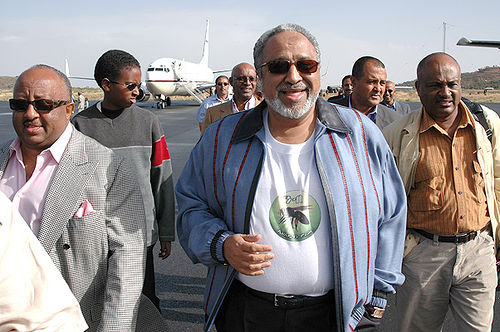
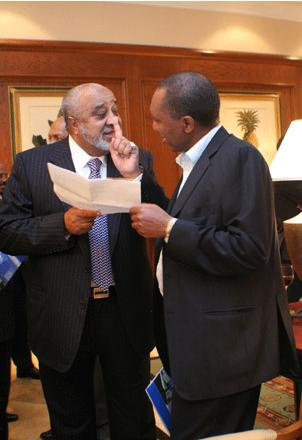
Al Amoudi on the other hand, has been an ardent financer and supporter of the Tigrean People’s Liberation Front (TPLF), the head ruling wing of EPRDF party and was donating money to Clinton Foundation. He was seen wearing a t-shirt bearing the election logo of the ruling party, bee. Al Amoudi was named as one of the Clinton Foundation Donors, according to information released as part of an obligation placed on former President Clinton when he supported Hillary Clinton's nomination as Secretary of State. Al Amoudi is reported to have donated between $1,000,001 to $5,000,000.The photos above portray Al Amudi’s political inclination and outright support of the current ruling party in Ethiopia and Foundation’s and parties the world over. As the pictures tell for themselves, there is no need for caption or explanation.


2.4 Vision, Dream and Goal

I was prompted to write this article when I accidentally came across this video (http://www.moibrahimfoundation.org/en) found in the middle of the page as you enter the Mo Ibrahim Foundation's official website. The video was screened on the weekend of 20 and 21 November, 2010 when the Mo Ibrahim Foundation hosted a cultural celebration and discussion forum on regional economic integration of Africa in Mauritius. The speakers ranging from Mo Ibrahim himself to, Dr Navinchandra Ramgoolam, Prime Minister of the Republic of Mauritius ,country rated as the most democratic in the past year by the Foundation, Donald Kiberuka of the African Development Bank (ADB),and many other African academics, civil society leaders, investors and politicians from all over Africa attended the forum. The program was stunning. So blessed with positive visions, dreams and goal and visionary Africans and concluding with an action plan. The man behind all this was Mo Ibrahim doing it through his Foundation, the Mo. Ibrahim Foundation. Established in 2006, the Mo Ibrahim Foundation aims to support good governance and great leadership in Africa. The Foundation works to: Stimulate debate on good governance, provide criteria by which citizens and governments can measure progress, recognise achievement in African leadership and provide a practical way in which leaders can build positive legacies on the continent when they have left office and support aspiring leaders for the African continent.

According to Ibrahim, "Good governance is crucial." With a $5 million initial payment, plus $200,000 a year for life, the prize is believed to be the world's largest, exceeding the $1.3m Nobel Peace Prize. Former South African President Nelson Mandela, former United States President Bill Clinton, and former United Nations Secretary General Kofi Annan are among those who have welcomed the initiative. The inaugural Prize was awarded to former president Joaquim Chissano of Mozambique, for "his role in leading Mozambique from conflict to peace and democracy." Festus Mogae won the 2008 Ibrahim Prize for Achievement in African Leadership, and will receive US$ 5 million over 10 years and US$ 200,000 annually for life thereafter.

The information available on the Foundation’s site states “the Foundation publishes the Ibrahim Index of African Governance, ranking the performance of all 53 African countries. Until 2009, the Index took into account only the 48 countries in sub-Saharan Africa. Countries are graded on factors which fall into four main categories: Safety and rule of law, sustainable economic opportunity, human development, and participation and human rights.’’

The Foundation is committed to supporting great an African leadership that will improve the economic and social prospects of the people of Africa.

He says development cannot be achieved without good governance. Good governance ensures that all of a country's resources are harnessed effectively and fairly to translate into improved quality of life for its people. Every arena, from healthcare to environmental stewardship, from education to human and political rights, is affected by the quality and nature of governance. While there have been improvements in many African countries recently, weaknesses in governance and leadership capacity are central to the issues currently facing the continent.

Well I think this is what Africa needs at this moment. Precious child of Africa, Ibrahim works for the safety, development and prosperity of Africans. He has no political party that he supports but enterprisingly sweats for the freedom, equality and justice of Africans including his native Sudan. He encourages all parties and politicians to step up together with the common denominator of good governance than the prosperity of few political parties, junta or clique.

To the contrary, our Al Amoudi doesn’t do any of the above. He is the opposite of all the above , except his few donations to hospitals, NGOs and individuals and few other causes in Ethiopia and else, he is not recorded doing anything meaningful in terms of good governance ,democracy ,equality or peace and tranquillity in Africa or his native Ethiopia.

Still compared with Ibrahim, Al Amoudi’s philanthropic activities such as the building of a 140-bed health care facility that supports visual impairment, disabled, children's health, works in poverty alleviation programmes, overseas scholarships and sponsoring of the CECAFA Cup, Africa's oldest cup competition for the last three years, can’t even reach one third of Ibrahim’s philanthropic works. I have heard of him saying that he is so committed for the progress and development of Ethiopia but I doubt if he meant it really or has really found out how he can realise the vision. Maybe he needs better advisors. Making huge investments and employing thousands of jobless Ethiopians can in no way be viewed as a success or improving Ethiopia. Ethiopia could be developed when the society cross sectionally gets fair access to resources, is empowered, is free, is equal and good governance is achieved.

Being an ardent supporter of the ruling party would only alienate and diminish the tycoon that could be looked up as model and icon of success by the Ethiopian (African) youth. Al Amoudi has lost huge credibility from the opposition parties in Ethiopia, their supporters, media and independent analysts due to his open support of the ruling party in Ethiopia .He has compromised his independence, neutrality and moral integrity. His financial, moral and investment role and support with the current regime in Ethiopia makes him an indirect perpetrator and elongator of the human rights abuse and the regime’s life span, as to many.

Unlike Ibrahim, he followed the Chinese model of non interference and neglected the abuse of human rights in the country. He never spoke of inhuman treatment of citizens in Ethiopia or Africa.

If Ibrahim progresses with his current pace and scope, his Foundation would be able to succeed in creating an Africa that is well governed, free, democratic and developed in less than a decade. If his vision, dreams and goals were followed or were at least assisted by tycoons like Al Amoudi, the achievement could be in the offing.

To support this write up with a strong literature on the role of investors and tycoons in good governance or the prevalence of democratic system, I have spent a day with no avail of finding one paper. This tells that the topic area is recommendable for researchers to further investigate.

Paulo Coelho’s piece is an amazing example of the exodus, exile and exclusion of the true children of Ethiopia from the holy land. The ‘false children’ of Ethiopia are now the ones who are inside, some looting, others cooperating in the looting process and many being looted. True children of Ethiopia on the outside, need to be considered worthy and let in and work for the betterment of their motherland.

The vision ,dream and goal of Ibrahim is to root out the central problem of Africa's underdevelopment and backwardness i.e. maladministration or bad governance and instill good governance instead.Al Amoudi's vision, dreams and goals, where as, so far only seem to be making money,money and money.

Gashe Al Amoudi ! It is time to invest on Good Governance!

Friday, December 24, 2010

Slavery openly practiced in Ethiopia: a case from Meki town

Thousands of farm labourers being whipped at work

By Ankober,DebreBirhan Blogspot’s Staffer 24/12/10

Genet Ayele’s book on Ethiopia’s former president Mengestu Hailemarim quotes Mengestu. Mengestu as he spoke of his conversation with HIM Hailesellasie just after the 1974 Ethiopian revolution. Mengestu and HIM Hailesellasie converse about the student’s movement, peasants, serfdom, feudalism and the revolution. Mengistu might consider himself as the liberator of the peasants and tillers and workers, anyways in the middle of this conversation HIM says “that system had gone long ago. We have dismantled it. It is dead and will not come back’’. The Emperor was referring to feudalism, peasantry and enslaving mode of governance and system. However both the Emperor and Mengestu were wrong. Albeit both considered they uprooted feudalism, serfdom and peasantry; none did.

According to Colin Darch (1976), in 1963 the University (Addis Ababa University) was closed down for two weeks by student disturbances and in 1964 further student demonstrations were held under the slogan ‘Land to the Tiller!’ A Presidential Commission was appointed and reported on student unrest. In 1965, the Ethiopian Student Union in Europe held its fifth annual conference in Vienna, and condemned feudalism, the Orthodox Church, the Imperial family, the nobility and the landed gentry, while advocating land reform and the establishment of an independent trade union movement. In a parallel development, the Ethiopian Students’ Association in North America, at its thirteenth annual congress in Cambridge, Massachusetts, condemned the IEG as a "festerng dictatorship". These two groups were the major overseas opposition groups at the time, although splinter groups also existed.’’

The then student movements, some of them bad and the rest; blessings were the trailblazers’ of Ethiopians socio-political consciousness. Not only consciousness, they were the real beginners of the unending fight for the freedom of the Ethiopian peasants, serfs and workers. Today, that struggle and those strugglers seem to be out of the course. Now, all University students unions are fully controlled by students loyal to the ruling party. The sufferings, troubles and enslavements of Ethiopian farmers and their children are forgotten. Nobody gives them ear or hand. Elite politicians are engaged in intra and inter party competitions and fight while slave serfdom and feudalism are intensifying in full swing all over the country.

This sort of serfdom is now ordinary in today’s Ethiopia. Ethiopia of the Ethiopian People’s Revolutionary Democratic Front‘s (EPRDF). Although for some time, the Derg announced its land reform program and nationalized rural land without compensation, abolished tenancy, forbade the hiring of wage labour on private farms, ordered all commercial farms to remain under state control, and granted each peasant family so-called "possessing rights" to a plot of land not to exceed ten hectares, it didn’t enable the farmer to be a real landholder.

In today’s Ethiopia, ruled by EPRDF that believes to be the “product and outcome” of Ethiopian peasants and framers, slave serfs are sold and traded like nothing; land is government’s possession thus the farmer still remains in a peasant hood. Today farmers are dislocated and their land is given to foreign investors and returning Ethiopian Diaspora.

Slave Serfs in today’s Ethiopia: the Case of Meki Town

The story begins from today’s geographic location of Semien Omo Zone of the Southern Nations, Nationalities and Peoples' Region (SNNPR) specifically from Wolayeta, Kembata and Hadya Zones. This region and the zone particularly, is the most densely populated area in Ethiopia. Family planning is almost unknown or ineffective in these areas. Nuclear families are almost unimaginable. Its worth consulting Peter Gill’s criticisms of Meles Zenawi’s failed population policy, in Famine and Foreigners: Ethiopia Since Live Aid, 2010. In this region of multiple births and unplanned families with dozens of children as a normalcy, feeding and nurturing all the children have become hard nuts to crack in recent years. Especially, following the recent manmade and natural hungers that occurred in the region, families have resorted to a new mechanism family reduction of selling their children to Oromo and other farmers and nomads. In fairer terms the natives call this process “adoption”, “transfer” or “promotion to a better life”. However, in its true sense the act, it is ‘sell or slavery.’

Manahelot (not a real name), has been to the area various times .He calls this process “a hunger induced internal enslavement or refugehood ”.According to him “when a Wolayeta or Kembata area born boy reaches the age of five or six, his parents make a deal with better off farmers from neighbouring regions such as Oromia to ‘ buy’ the boy. The farmer ‘buys’ the young boy, making sure that the only payment or salary the boy will be given is his daily food and that the boy works for him’’

These boys start a new life in a newfound land. They will be hired and adopted to their new families working as herders and maids. Most of these young boys abscond as they reach their adolescence and return to their families while others get assimilated into the new families and will be disconnected from their biological parents. Most of these boys that escaped the life of herding have revealed that they have worked their heads off and were treated slavishly.”

Mahider Bitew, Children's Rights and Protection expert at the Ministry of Women's Affairs of Ethiopia once said that some remote studies conducted in Dire Dawa, Shashemene, Awassa and three other towns of the country indicated that the problem of child trafficking was very serious. According to a 2003 study about one thousand children were trafficked via Dire Dawa to countries of the Middle East. The majority of those children were girls, most of whom were forced to be sex workers after leaving the country. The International Labor Organization also had identified prostitution as the Worst Form of Child Labor.In Ethiopia, children trafficked into prostitution, to provide cheap or unpaid labor and to work as domestic servants or beggars. The ages of these children are usually between 10 and 18 and their trafficking is from the country to urban centers and from cities to the country. Boys are often expected to work in activities such as herding cattle in rural areas and in the weaving industry in Addis Ababa, and other major towns. Girls are expected to take responsibilities for domestic chores, childcare and looking after the sick and to work as prostitutes.

The "sell’’ of children from the SNNPR for cattle herding to neighbouring regions is not trafficking, but enslavement and is still practiced in this hour and date.

Move to Meki: life of ‘salve serf’

Meki is a town located in the East Shewa Zone of the Oromia Region, Ethiopia. Based on figures from the Central Statistical Agency in 2005, Meki has an estimated total population of 36,597 of whom 18,422 are men and 18,175 are women. News sources reported in March 1974 that, as part of the Ethiopian Revolution, peasants near Meki rose up against local landlords, settling old grievances. At least 15 persons were reported killed: about ten victims had been hacked to death with knives and spears, and the bodies of three people were found in wells. The police regained control after killing a dozen peasants and arresting hundreds.

Large scale farming and irrigation have been practiced in the area since times of the Derg regime. EPRDF’s land reform allows land leasing to a third party and transfer rights within families, specifically towards off-spring, are also allowed. Using this policy as convenience farmers have been renting out their lands to individuals investors and companies to till the land and sell their produce .Thousands of individual investors and companies now farm and sell their produce such as onion, tomato, pepper, mango, cabbage and other vegetables in Meki. Most of the produce is locally consumed while the rest is exported. Many of the irrigated agricultures in the Meki area are based on shallow (up to 10 m deep) groundwater accounting for 25% of the total irrigated area.

Adolescent kids of SNNPR that escape from their ‘masters’ and return to their families will be received with a cold smile in their native home and by their families .He will be awaited with more young babies, no bed or place to sleep and food to eat or a land to farm. Hence, he will be advised to move to the nearest commercial farming area, Meki and work as a “labourer”. The young teens of Wolayeta that deserted their ‘masters’ finally end up in Meki irrigation farms to work as daily labourers, or technically as ‘slave serfs.’

“I was exploited and mistreated by my adoptive families. They fed me only twice a day. Ultimately, I have decided to escape from them and join my families in Hadeya. But my families were not ready to welcome me. One of our villagers advised me that we better go to Zeway town and look for work’’ says Bocha (not a real name) who works as a daily laborer in one of the individually owned Meki commercial farms. Scarcity of job in Zeway town led Bocha to the next town of Meki. He has been working as a daily labourer (slave serf) for various individual investors for the past three years now in this town.

Defining slave serfdom, Wikipedia puts it in the following way “The last type of serf was the slave. Slaves had the fewest rights and benefits from the manor and were also given the least. They owned no land, worked for the lord exclusively and survived on donations from the landlord. It was always in the interest of the lords to prove that a servile arrangement existed, as this provided them with greater rights to fees and taxes. The legal status of a man was a primary issue in many of the manorial court cases of the period. Also, runaway slaves could be beaten if caught. ”

Bocha typically meets the above definition. Bocha has no right, benefit and survived on meagre donation. Every morning approximately 15 to 20 thousand “slave serfs’’ living in Meki town originating from all regions of Ethiopia Amhara, Oromia and mostly Southern region queue in Meki city center looking for employers (feudals) to take them to their farms in the town and the vicinities of Sembo. These labourers work in the nearby villages of the town and in the city. A private investor pays 4000 birr land rental fee per hectare for one year to the native farmers. Compared to the current rate a one hectare farmland is leased to foreign farmers ($1), the rate in Meki to local investors, is a staggering one.

The ‘slave serf’ is contracted officially to work for the day when he receives one Ethiopian birr for ‘breakfast’ in the form of a deposit. Soon after, begins the exhaustive, dehumanizing and exploitive work in the farms. They dig the ground, tile and water the soil, weed, pick and do all sorts of jobs in the farm. Around 20 labourers work in one hectare. The investors hire one Kaboo (flogger), who whips those labourers that are weak, lazy or stopped working for a minute for 20 labourers. These Kaboos are paid 20 birr per day for just standing and whipping the weak and tired labourers. This makes the work an absolute slavery. These ‘superintendents’’ acted the same way as African slaves that worked in American plantations superintended another slave man who carried a whip, and frequently cracked at them, permitting no dawdling or delay at the turning. In the then USA it was emphasized by a tall and powerful Kaboo, who walked to and fro in the rear of the line, frequently cracking his whip, and calling out in the surliest manner, to one and another, 'Shove your hoe, there! Shove your hoe!' and striking them with the whip, as in today’s Meki.

The labourers have no insurance, bonus or protection or right. Their livelihood is insecure. Living conditions are cramped with as many as ten people sharing a hut. There are many cases where some labourers who resist whipping or work less harder and make mistake were corporally punished to go with no payment.

What makes the work worse and racist and feudalistic is the scale used to pay the labourers. In Meki farms, all labourers are not equally paid and treated .The wage is based on their ethnic origins.The justifications for this are weired,so I better not say them here.

An Oromo farm laborer is paid 18 birr per day.

An Amara farm laborer is paid 17 birr per day.

A Wolaeyeta,Kembata,Hadaya farm labourer is paid 16,15 and 14 birr per day respectively. Whereas ,Weretegna’s,(permanent labourers) are given 25 kilo maize and 2 kilo shiro(peas) per month and are paid from 350 to 550 birr as a monthly salary.

“I was beaten like a donkey many times just because I was tired and wanted a break or talked with my workmate.’’ Bocha laments.

A private investor in the Meki farms that this writer talked to said that he is aware that daily labourers in Meki farms are slavishly treated, “I understand that we treat the labourers inhumanly but as the practice is taken normal and best way of getting good output, we apply it”. He says in this same scenario, most of the around 5000 individual investors and companies leasing the land from the farmers are individuals or companies affiliated or supported by the Tigrean Development Association (TDA) and Dedebit Microfinance.

Howard Dodson (2008) said that the slave trade was back in full force, “This modern slave trade, however, is not limited to just young Africans; women and children are also being enslaved in almost every continent. It is estimated that there are over 27 million enslaved persons worldwide, more than double the number of those who were deported in the 400-year history of the transatlantic slave trade to the Americas. What is remarkable is that this unprecedented trafficking largely goes unnoticed. The 27 million victims of the modern slave trade are more invisible to the world’s eye than were the 10 million to 12 million Africans who were forcibly sent to the Americas during the sixteenth through the nineteenth centuries.”

The situation and enslavement in Meki is not part of the above categorisation, I believe. The Meki case is a replica of the 19th century United States of America’s Southern farms. The Ethiopian slave serf or slavery is a result of poverty, ethnic federalism, unfair land tenure system, governance and so on. The peasants, serfs and feudalistic exploitation and manipulation have reappeared in different forms and colours in Ethiopia. Although, Meki is taken as a case in point in this article, there are possibly similar cases in other regions of Ethiopia.

Ethiopian students need to take up this issue on board, learn from their predecessors, political parties should also; above all, if there is openness and readiness from the government side, all these need to be taken into consideration and measured. It should change its policies, approaches and principally ideology.

Saturday, December 18, 2010

Another War in the Horn?


Ethiopia deploys over 2500 soldiers between Ethio-Sudan borders

Vehicles heading in droves to the border

By Ankober,DebreBirhan Blogspot’s Staffer 18/12/10


It seems another war is gonna break in the horn of Africa possibly in the Ethiopia and Sudan border. The grounding is from the Ethiopian side to attack its own rebel forces in/through the border, escort Eritrean rebels via Sudan to Eritrea or fight a war with Sudan itself. Sources from the Ethiopian Defence Forces revealed that within the past week alone a good number of soldiers have been deployed to metema town, the border town between Ethiopia and Sudan. The forces and stakeholders from the Ethiopian side are being told that the deployment is in preparation of a war with Sudan as “it has been expelling Ethiopians in the border and in Sudan.”

Over 2500 soldiers are being transported to Metema since last night (17/12/10). Around 38 buses with a holding capacity of 60 people have been contracted between the Ethiopian Defense Forces and private bus transporters to convey the soldiers to North Western part of Ethiopia. They will transport them in two rounds: First Round from Werso Military Training Centre to Metema and in the Second Round from Bersheleko Military Training Centre to Metema .Most of the selected drivers are paid 20-30 thousand per Chauffer .The soldiers and stakeholders are being told as if there was going to be war between Ethiopia and Sudan because Sudan is expelling Ethiopians from Sudan’’ The Source indicated.

Military convoys and tanks have also been moved to Metema within the past two weeks. Metemma (also known as Metemma Yohannes) is a town in north-western Ethiopia, on the border with Sudan. Located in the Semien Gondar Zone of the Amhara Region, Metemma has a latitude and longitude of 12°58′N 36°12′ECoordinates: 12°58′N 36°12′E with an elevation of 685 meters above sea level. Across the border is the corresponding Sudanese village of Gallabat. According to the British diplomat Hormuzd Rassam, who travelled through Metemma in November 1865 on his diplomatic mission to Emperor Tewodros II. Based on figures from the Central Statistical Agency of Ethiopia published in 2005, Metemma has an estimated population of 3132 males and 2449 females for a total population of 5581 (Wikipedia).

According to Asmerino.com, between 29 November and 12 December 2010, a delegation of the Eritrean People’s Democratic Party (EDPD) headed by Party chairman, Mr. Woldeyesus Ammar, conducted important discussions with high-level authorities of the fraternal Ethiopian government as well as with organizations and individuals on questions of vital importance to the Eritrean people’s cause for change and democratization.

Prime Minister Meles Zenawi responded to the delegates saying the engagement strategy of his regime with Eritrea has changed as of January 2010.

Till the onset of 2010, we were focused on developing our country without Eritrea [and its ports] and we scored great achievements. It was our policy to ignore Eritrea and its regime as long as that regime did not provoke Ethiopia for a reaction. However, today, and taking into consideration the developments in the region, EPRDF has adopted a new strategy for effective action that can accelerate the downfall of the People's Front for Democracy and Justice (PFDJ ) regime in Eritrea.” He said

Meles also asserted to the delegates that “Any means of struggle is legitimate and acceptable. But as EPRDF, we can have our own view as to which means of struggle is more effective in the current Eritrean situation. We can say peaceful and democratic means of struggle cannot give quick results in Eritrea.”

This tells that Meles is ready and committed more than ever to overthrow the Eritrean regime by using the Eritrean armed opposition groups as proxy. Both regimes have a strong intelligence force within the status quo and military's of the opposite nations. I remember once an Eritrean former high ranking military officer during the Ethio-Eriterian border war (1998-2000) telling me that Tigrean spies were within the Eritrean army claiming that they are Eritreans deported from Ethiopia. Some of these double agents, as to him “were caught passing information to the enemy forces (Ethiopian)”. Similar scenario exists within the Ethiopian counterpart.

The continuously increasing build up of forces within the Ethio-Sudan border by Ethiopian soldiers and vehicles has puzzled many.

My assumptions on the military build up

Assumption 1. There are apparent intelligence and corporal information that Meles has lumped up all Eritrean oppositions to come together and use only gun to remove the Issayas regime. There are armed Eritrean forces, though few, organised under religion, ethnicity as in the case of Kunama , afar and other small oppositions...now he wants to merge all of them with those that say peaceful only and wage war.... after all this is what he meant by change of strategy towards Eritrea as of Jan.

Similarly as Meles is preparing to hand over a long stretching Ethiopian land area to Sudan, the force might also have been deployed to facilitate this process.

Assumption 2. if war breaks out between Ethiopia and Eritrea,the only perpetrator and wager of the war is the Meles Zenawi side because....Eritrea has no man and economic power, psychologically weakened force, and so on to go to war with Ethiopia at this moment...so if there is ...it will only be Meles attacking Eritrea, and this scenario is still unassented.

Assumption 3. Meles is frightened of the new grouping of forces that are forming unity in Eritrea especially UEDC, the Unity of Ethiopians for Democratic Change. This Unity includes,Tigrean People's Democratic Movement (TPDM) grouping and because Meles knows that Isayas fully supports and wants to concoct another Tigrean puppet in Ethiopia via TPDM and as in the past few weeks and months TPDM has been making an effective and strong attack in Tigrean borders and mobilizing Tigrean youth ,Meles above and all is compelled to avert this and squash the oppositions. To this end he might use the Sudan border.

In this volatile area Ethiopian Peoples Patriotic Front (EPPF),has also been attacking government forces in Quara and Metema borders.


Assumption 4.As the regime in Ethiopia said the war is going to be with Sudan. This is less feasible. The up to date diplomatic and military situations of the Sudan and Ethiopia don’t presage that.

Assumption 5. Last but not least.This assumption sounds to be the most probalable , a Meles regime insider says the forces are being deployed to protect Ethiopia from fleeing Sudanese soldiers and Ethiopian rebels from entering Ethiopia if the January 9 ,2011 Sudanese Referendum ends up a menace '' during the civil war in Ethiopia in 1991 tens of thousands of soldiers fled to Sudan...same thing can happen now, thousands of armed men may desert to Ethiopia...that may be the reason why our troops are moving...to protect Ethiopia.If there is chaos in sudan...other armed opposition groups might attempt to exploit the situation to launch attack against our government (Ethiopia).The proximity of metema to both Eritrea and Sudan could be the cause for the huge deployment in this area '' the source said.

If the Sudanese government can't solve the referendum peacefully and the issue turns out uncontrollable,it can spill over to Ethiopia and may affect Ethiopia's oil import from Sudan as more than 75% of Ethiopia's oil imported from Sudan, '' Whatever bad unfolds, numerous number of Sudanese refugees from Sudan will flock to border towns such as Metema,Gambela,Benishangul and Tigray.Currently,there are tens of thousands of Sudanese refugees in Gambella.'' he added.

Voice of America reported on the 17th December,2010 that problems remain before the vote can start. As many as six cases have been filed in Sudan's constitutional court challenging the referendum commission and the legality of the vote. The court has agreed to hear one of the cases so far, brought by a group of civil society organizations. They claim southerners in the north have been prevented from registering by the southern ruling party.One of the court cases has the potential to stop the referendum.

The South Sudan Referendum can lead the Horn of Africa into a total civil war,unless handled well.There are direct and indirect effects of the Referendum that can create a fertile ground for rebel groups,oppositions,foreign powers and regimes in the region to achieve their goals or lose their hold.


Friday, December 17, 2010

What IF...

©Ankober 17/12/10

What if wrong was right?

Death was birth

Hate was enjoyable

Harm was help

Torture was contentment

Disease was comfortable

Mischief was proper

Hunger was bearably relieving

Fall out was zealously needed

Pain was borne and sought

What if crime was normal?

Grief was pleasing

Ignorance was knowledge

Promiscuousness was looked up

Insanity was the right way to live

Disrespect was valued

Stupidity was brilliance

War was nice

Repression was correct

Anger was calming

What if fear was not disgusting?

Betrayal was harmless

Inferiority was fine

Jealousy was rejuvenating

Killing was fair

Waste was aromatic

Immorality was moral

All that we think is bad turns out adorable

And good was bad

What if all the sorrows of Ethiopia were well?

How would this world be?

Opposite as it is, this world

Might fit it, like it.

but

Who will first attempt it?

Related Posts Plugin for WordPress, Blogger...